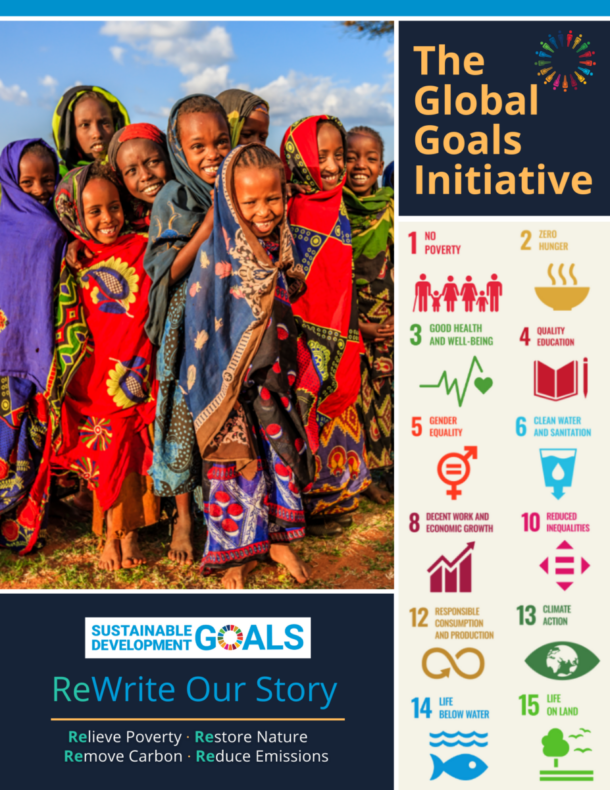
So, what are the 2030 Sustainable Development Goals, and why do they matter?
“The 2030 Sustainable Development Goals (SDGs), also known as the Global Goals, were adopted by the United Nations in 2015 as a universal call to action to end poverty, protect the planet, and ensure that by 2030 all people enjoy peace and prosperity.
The 17 SDGs are integrated—they recognize that action in one area will affect outcomes in others, and that development must balance social, economic and environmental sustainability.“ – United Nations Development Program, 2023
What’s the central component of the 2030 Global Goals Initiative?
Through its unique “Recruit & Restore” program, the 2030 Global Goals Initiative provides both jobs and fair income for villagers living in extreme poverty. Since 2007, it has created sustainable livelihoods via the work involved in planting and protecting new mangrove forests — and in the process — has transformed lives and landscapes in these under-served communities.
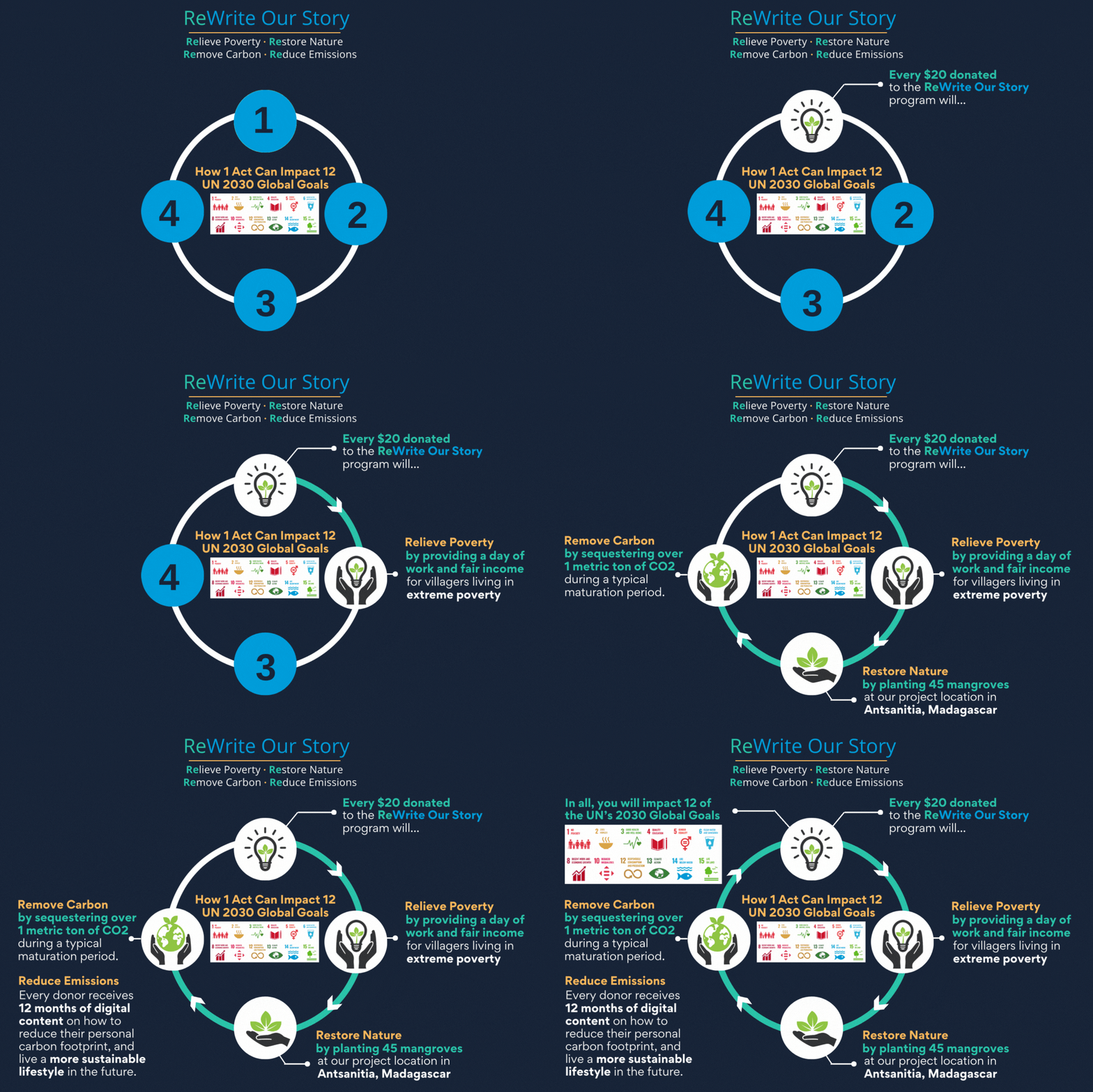
This innovative approach for simultaneously addressing the major humanitarian and environmental challenges of our time is also being leveraged as a holistic program to impact 12 of the UN’s 2030 Sustainable Development Goals (SDGs) to end poverty, protect the planet, and ensure prosperity for our current and future generations.
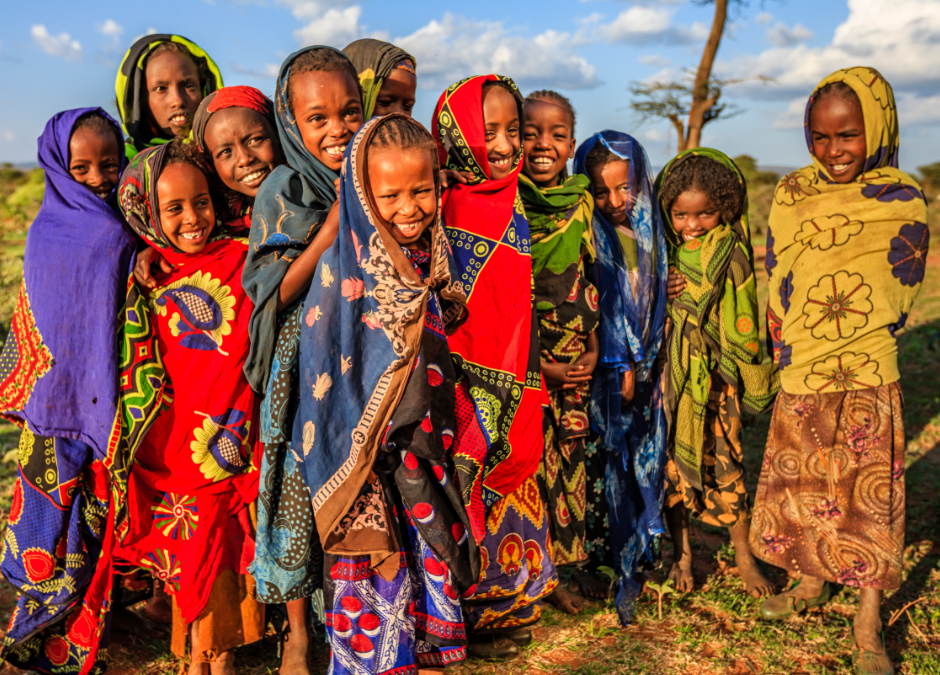
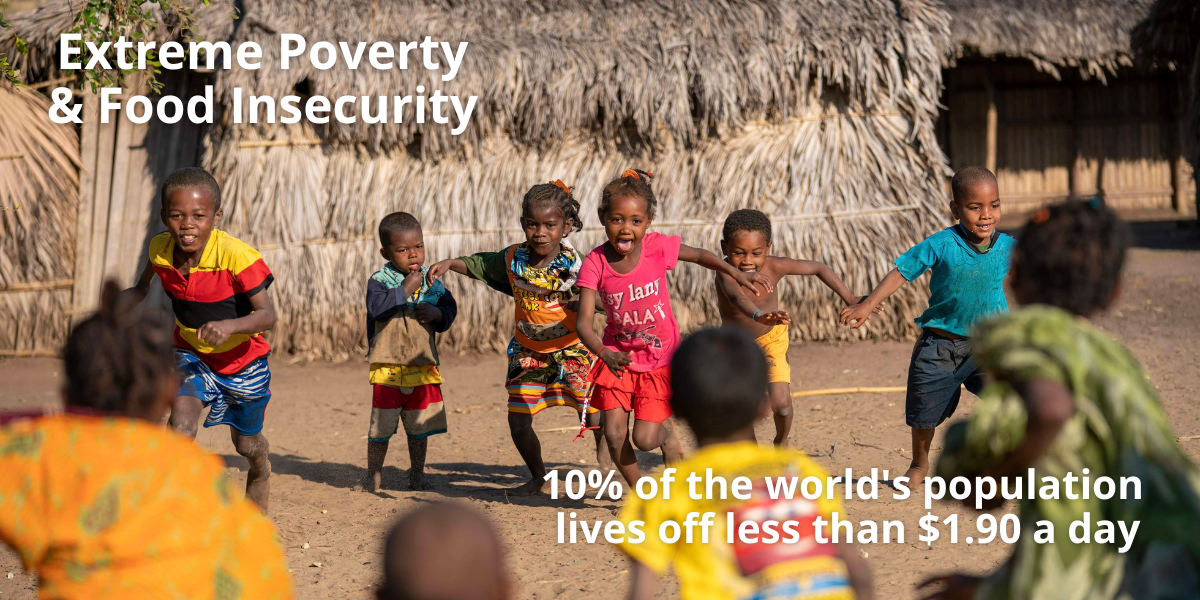
In order to maximize the benefit for both people and planet, the island nation of Madagascar serves as the focal point for the on-the-ground activities of the 2030 Global Goals Initiative. Madagascar has the third highest rate of extreme poverty in the world — 70% of people live off less than $2.15 a day. The population is also enduring the world’s first climate-induced famine. As the fourth largest island on earth, it is also classed as one of 17 mega-diverse countries. However, due to deforestation, more than 90 percent of the entire country’s forests have been destroyed. To further compound matters, at least 75 percent of the species found in Madagascar do not live anywhere else on Earth!
In short, the conditions in Madagascar combine to multiply several-fold the program’s potential benefits for the environment and human well-being. The primary and secondary benefits (supporting 12 of the UN’s 2030 Sustainable Development Goals) fall into the 4 key categories outlined below.
Request an interactive playbook on the global goals initiative
Poverty & Food Insecurity: 2030 Sustainable Development Goals 1, 2, 3 & 6
UN SDG 1: End poverty in all its forms everywhere
Since 2007, over 14,000 Malagasies have reaped the benefits of fair wage employment through Recruit & Restore land restoration projects. Modest donations from individuals around the globe are creating sustainable livelihoods and increasing household income in these vulnerable communities.
UN SDG 3: Ensure healthy lives and promote well-being for all — at all ages
Recent employee surveys show that the increases in household income directly augment families’ ability to reduce hunger, secure healthcare, and gain greater access to clean water. In total, the Recruit & Restore land restoration movement currently provides 56,692 people globally with access to high-quality food. Similarly, enhanced food and income security provides over 40,000 families with access to healthcare and education around the globe.
As part of Recruit & Restore programs, fresh water wells are drilled within project communities, and these help maintain and expand the land restoration projects, as well as seedling nurseries. Concurrently, the wells provide inhabitants easy access to clean water for their daily needs. This provision is vital, as Madagascar ranks third- from-last in the world in terms of access to safe water. While 82% of urban residents have access to clean water, only 34% of rural residents do. It also ranks fourth-from-last in access to sanitation. Among the 83% of inhabitants who live in rural areas, only 6% have access to safely managed sanitation facilities.
Human Potential & Empowerment: 2030 Sustainable Development Goals 5, 8, 10 & 12
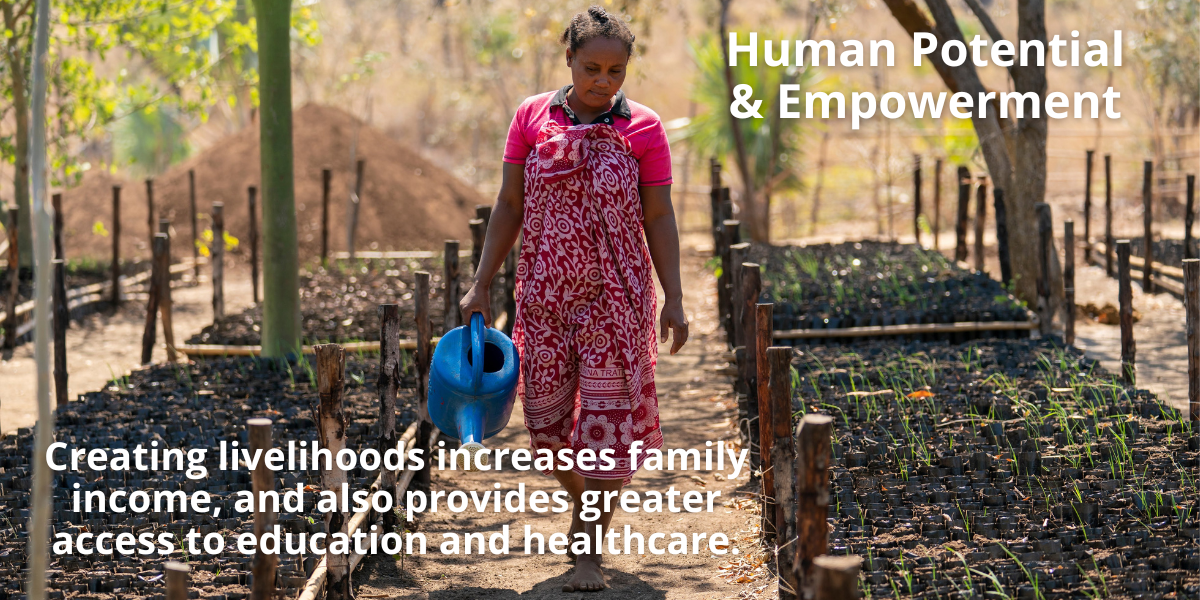
By creating fair wage employment through carefully-structured land restoration projects, the 2030 Global Goals Initiative literally changes the trajectory of lives for families living in extreme poverty.
UN SDG 8: Promote sustainable and inclusive economic growth; full and productive employment; and decent work for all
The individual experience of one employee at a project site in Madagascar provides a representative insight into the transformative impact of the program’s outcomes: Now in her tenth year of land restoration work, Maman’i Kambana has been employed since 2014. When she started, her income was so small that she couldn’t afford to educate her two children, but today they are both full-time students, and she has even started her own small business!
The majority of employees are women and many leadership roles at Recruit & Restore project sites are held by women. Creating sustainable livelihoods and increasing household income in these local communities act as a practical strategy for tackling global inequality — a central focus of the 2030 Sustainable Development Goals. What’s more, recent surveys of employees confirm that, in addition to helping participants meet food, healthcare and clean water needs, the program also delivers a range of key ancillary benefits for their families, including access to grade schools, enhanced resources to pay off debts, and even the ability to start micro-enterprises.
Take the “Race Against Time” Quick Quiz:
How well do you know The UN 2030 Sustainable Development Goals? Find out here!
Climate Action & Sustainability: 2030 Sustainable Development Goals 12 & 13
SDG1 calls for “an end to poverty in all its manifestations by 2030″. It also aims to ensure social protection for the poor while lending support to people harmed by extreme climate-related events and other natural disasters.
The entire continent of Africa has been responsible for less than 3% of total global emissions. Yes, it is now most likely to endure the worst impacts of climate change, with the climate resilience score for the island of Madagascar among the lowest on the continent.
UN SDG 13: Take urgent action to combat climate change and its impacts
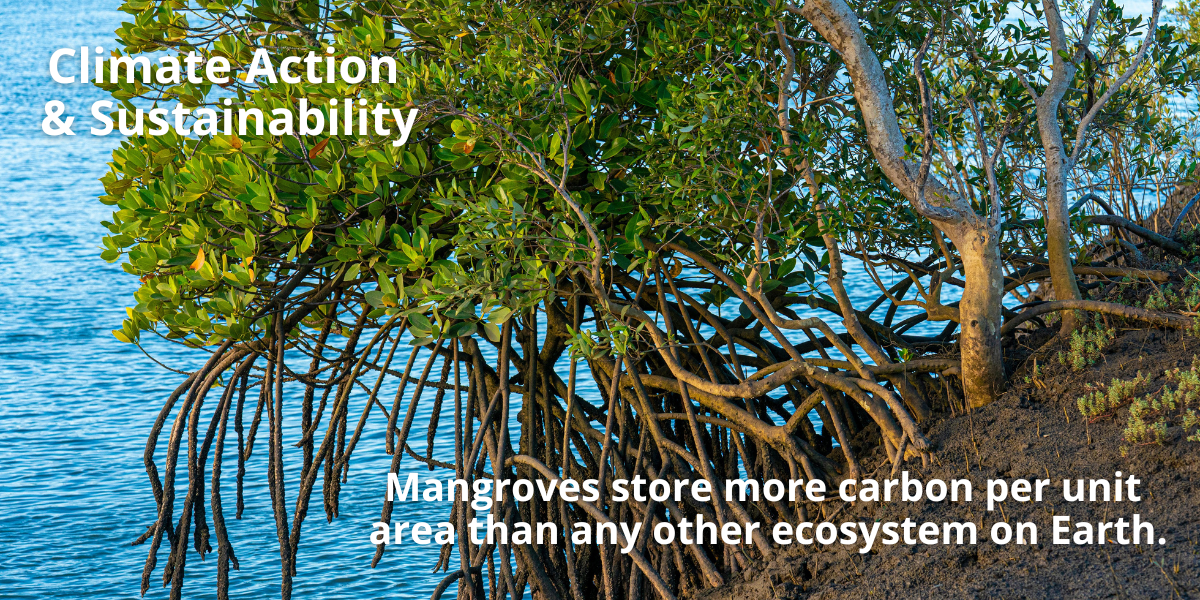
Mangroves are native to a limited band of global locations, including Madagascar. Here, at the 600-hectare site supported by the 2030 Global Goals Initiative, currently just $20 will create one full day of work — and fair income — enabling a community member to plant 100 mangroves!

Nothing is more critical to the global climate-change mitigation than removing existing carbon from the air as effectively and swiftly as possible. By focusing on the restoration of mangrove forests, we are mobilizing one of the world’s most effective natural means of combating global warming. Compare mangrove forests to terrestrial ones: Studies indicate that mangroves sequester up to 5 times the CO2 equivalent of a mature tropical rain-forest.
The fact that mangroves are so efficient in sequestering carbon is just one reason why they are seen as a key element in tackling global climate change. Mangrove land restoration also provides vital habitats for wildlife and restores fisheries and estuaries, which are essential breeding grounds for ocean life. Just as important, mangroves have a very dense root structure that helps to prevent harmful erosion and protect vulnerable coastlines from extreme events like rising seas and flooding. As a whole, the 2030 Global Goals Initiative creates an enhanced level of climate resilience for the challenges that vulnerable communities will experience in the future due to global warming.
UN SDG 12: Ensure sustainable consumption and production patterns
In addition, anyone wishing to contribute to supporting the 2030 Sustainable Development Goals is able to couple meaningful global action with practical educational advice. How so? — All supporters of the 2030 Global Goals Initiative receive a one-year subscription to a monthly educational series called Sustainable Solutions. This informative content provides you with a practical road-map for creating your own low-carbon lifestyle. It’s a digital collection highlighting 12 practical contexts to heighten carbon sensitivity in our daily lives. It includes topics like the principles of a Circular Economy, the critical importance of water, emissions reduction through home-life choices, the impact of travel or food waste…and much more! These carbon-certified insights serve as a monthly guide for reducing future emissions through personal lifestyle choices that will directly protect the planet.
Environmental & Wildlife Conservation: 2030 Sustainable Development Goals 14 & 15
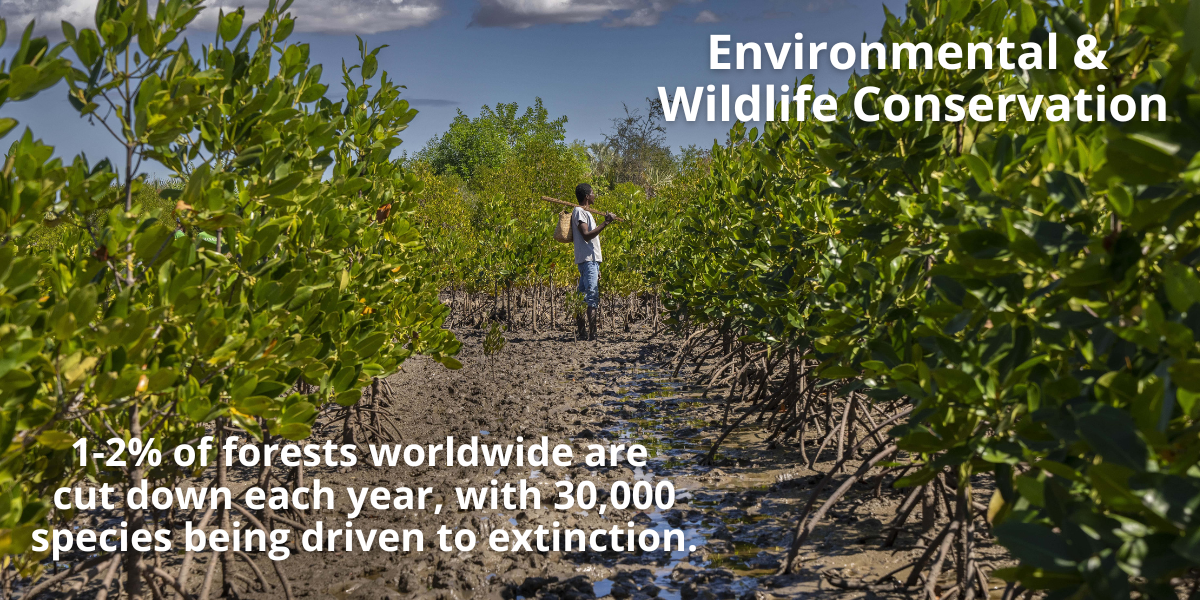
The restoration of forests and habitats is especially critical to the preservation of biodiversity in an ecological “hotspot” like Madagascar, where 90% of the primary forests have been lost and 75% of the species found in Madagascar are endemic to the island. The Forest and Landscape Restoration (FLR) approach used as part of the 2030 Global Goals Initiative project encompasses the best of both reforestation and restoration. While reforestation involves the natural or intentional regeneration of tree cover after forest loss, restoration goes beyond simply replanting trees. It’s about aiming to recover the structure, biodiversity and functioning of an ecosystem: bringing back the entire web of life that was once present. It is a more holistic and longer-term method of restoration and conservation, delivering more comprehensive benefits to communities and the ecosystem services we all depend on.
UN SDG 15: Conserve and elevate our relationship with our planet: Restore and promote sustainable use of terrestrial ecosystems; sustainably manage forests; combat desertification; halt and reverse land degradation; and halt biodiversity loss
Vital work is done to support communities through the adoption of agroforestry, beekeeping and/or conservation agriculture. This reduces pressure on the forests while building viable incomes, food security and nutrition, long-term resilience, and enhanced success at restoration efforts. Taken as a whole, this comprehensive landscape restoration approach serves to mitigate the drivers of deforestation. Practically speaking, it employs local community members, plants new trees, restores and maintains biodiversity, and facilitates diverse and sustainable livelihood options.
Take the “Race Against Time” Quick Quiz.
How well do you know about the importance of biodiversity? Find out here!
So that all donors can have a first-hand insight into how they are impacting the 2030 Sustainable Development Goals, detailed project-status and results reports are shared on an annual basis with global supporters. Key metrics include areas such as: hectares under management; the number of landscape projects and individuals employed in under-served geographies; number of women and youth employed; income diversification (e.g. beekeeping and agroforestry activities); and quantified carbon/greenhouse gas emissions removals.

Just as dropping a stone into water creates ripples far from the initial entry point, our small actions can lead to much bigger changes, even if we can’t see how far they extend! Full of on-the-ground insights, this 1-minute video provides a simple summary of how you can contribute to key environmental and humanitarian challenges by choosing to support the 2030 Global Goals Initiative in Madagascar.
As you do so, your actions will be creating powerful, positive change for both people and planet, and you will personally be helping to impact 12 of the UN 2030 Sustainable Development Goals!

View an Interactive Playbook on how a Climate Change Donation Creates 4-in-1 Climate Action

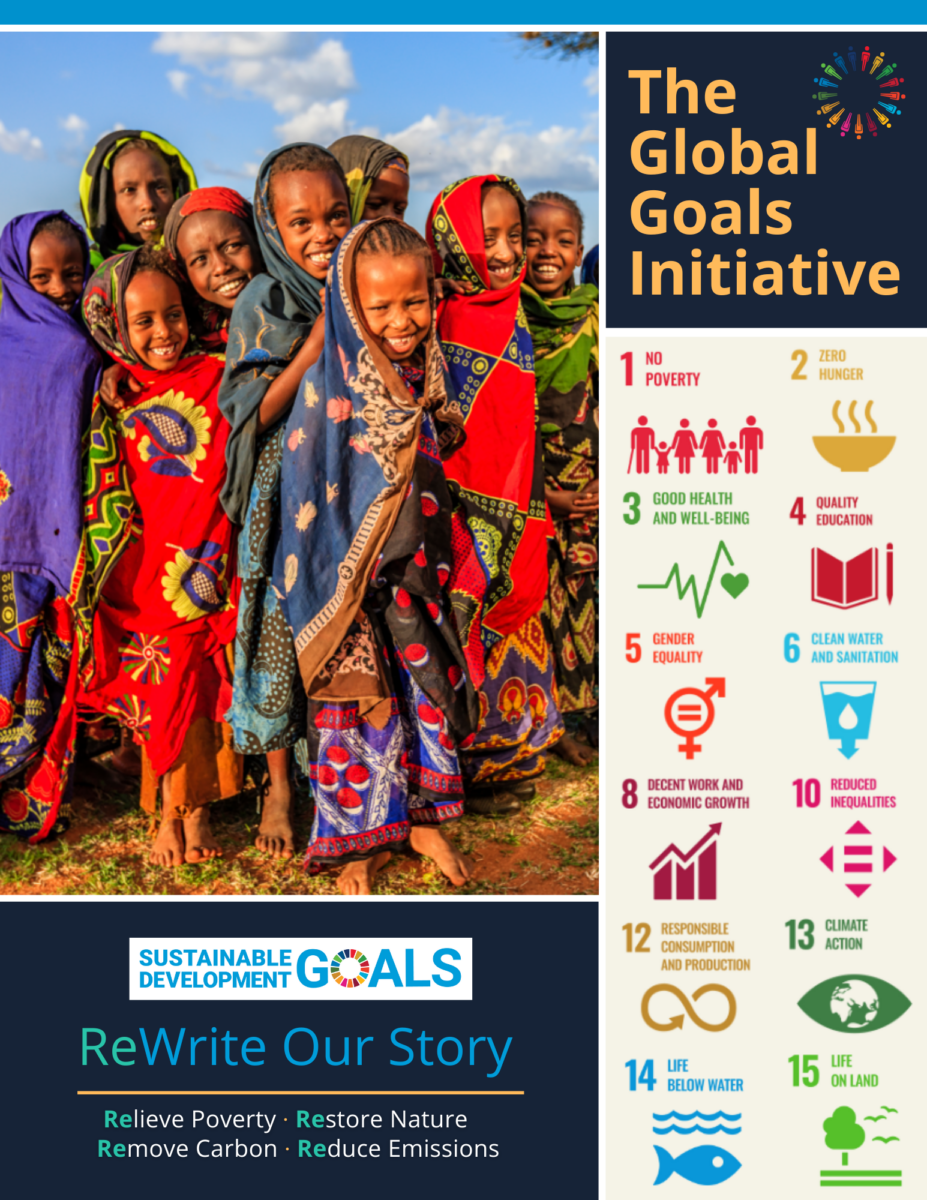
See an Interactive Impact Report on How You Can Impact 12 of the World’s 2030 Global Goals


Explore an Interactive Version of “The Climate Positive Carbon Footprint Offset Program”