Tracking Our Impact for People & Planet in Africa
latest outcomes at a glance: alleviating poverty, restoring ecosystems, and mitigating climate change
alleviating Poverty
restoring ecosystems
mitigating climate change
The Power of Alleviating Poverty & Restoring Ecosystems in Africa
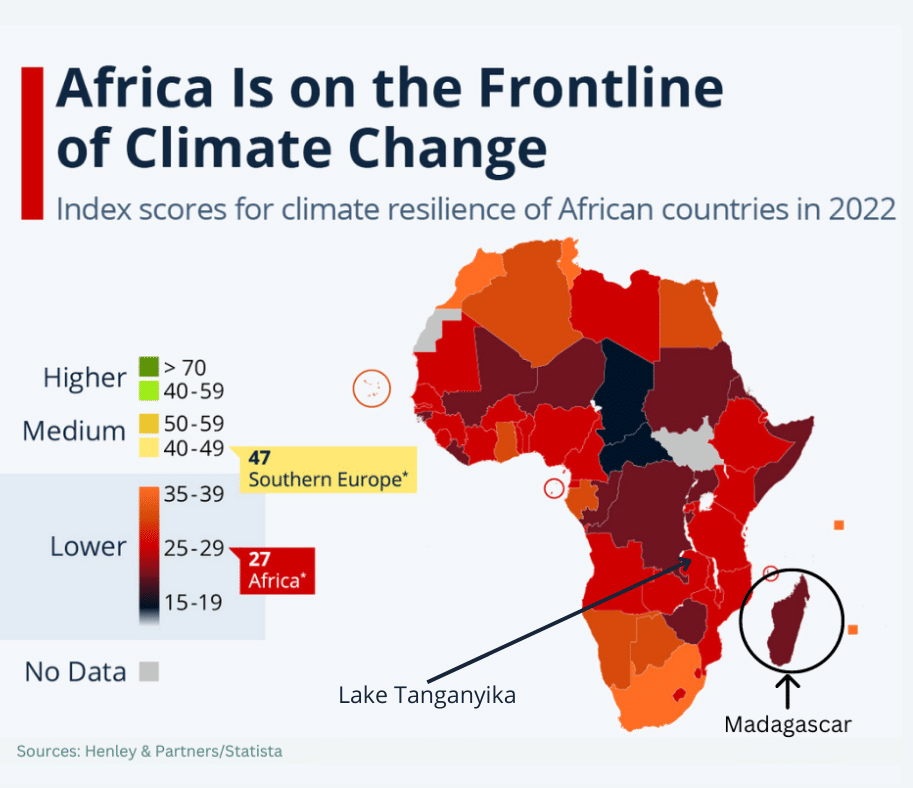
Africa has one-fifth of the planet’s remaining forests but is losing them faster than anywhere else. Better protection and restoration of these forest landscapes could reduce or remove 1 billion tonnes of CO2 annually while helping hundreds of thousands of Africans earn a better living.
A journey of a thousand miles begins with a single step—and for Purpose on the Planet, that step came at the start of 2022. That’s when we provided the first six months of work and income for community team members to plant an initial 10,000 trees at our original ReWrite Our Story project site in Madagascar.
Today, that first step has grown into a holistic approach to alleviating poverty and restoring ecosystems in two biodiversity hotspots in Africa through community-led conservation. By creating living-wage conservation roles through Recruit & Restore projects, our programs show how environmental restoration in Africa can strengthen livelihoods and protect precious ecosystems, while also supporting global, climate-change-mitigation efforts, and also building long-term resilience for local communities facing immediate climate and economic challenges.
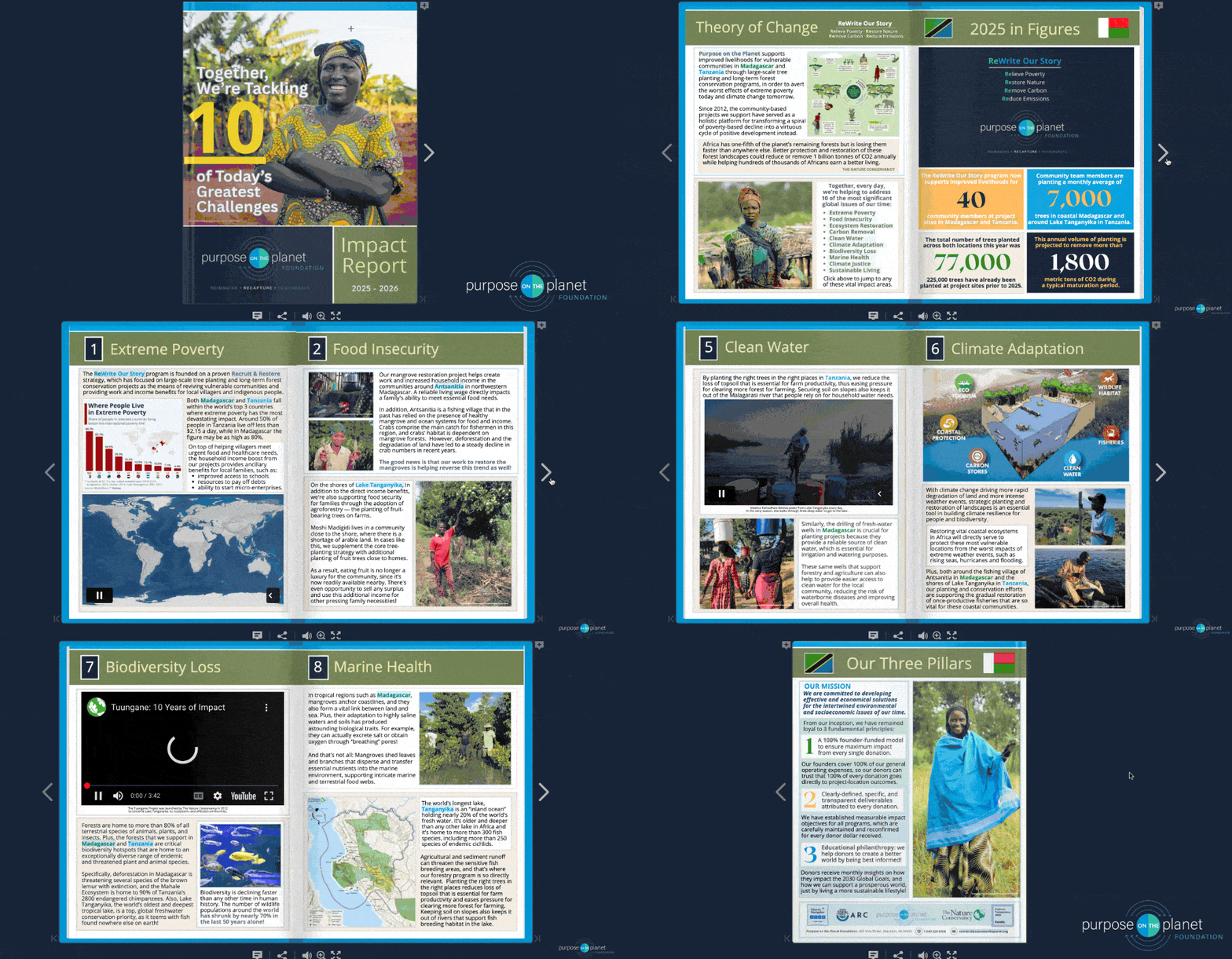
The details below are taken from our Year-End Impact Report and offer an at-a-glance overview of the key outcomes that are currently being delivered for people and planet at our project locations on the continent.
Alleviating Poverty & Food Insecurity in Africa
We’re proud to share that we doubled the number of local community team members that we support in Africa over the last year.
With your help, we’re now strengthening brighter livelihoods for 50 community members in Africa—twice as many as last year. These living-wage opportunities play a direct role in alleviating poverty, helping families reduce food insecurity, meet daily needs, and improve overall well-being.
Income generated through our Recruit & Restore projects supports underserved communities in Madagascar and along the shoreline of Lake Tanganyika in Western Tanzania, where access to reliable employment is limited but the need for sustainable livelihoods is critical. Specifically, in Madagascar, the teams of local villagers collect and sort mangrove propagules, then plant each species at optimal tidal-zone sites. While on the eastern shores of Lake Tanganyika, program participants receive support, training and income for planting ficus seedlings and ensuring their long-term health.
In both locations, in addition to alleviating poverty and helping villagers meet immediate food and healthcare needs, the household income boost from our long-term tree planting and long-term forest conservation projects provides other important ancillary benefits for local families. For example, recent employee surveys from Madagascar report positive changes in families’ access to schools, resources to pay off debts, and even the ability to start micro-enterprises.

Restoring Ecosystems & Biodiversity Hotspots in Africa
Today, we’re planting an average of 7,000 trees every month, helping restore degraded landscapes while creating meaningful work for local villagers.
Each of our project locations focuses on restoring ecosystems in Africa using approaches tailored to local environmental conditions, cultural knowledge, and long-term conservation needs.
ARC ACREP Site: Antsanitia, Madagascar
The ACREP planting area spans approximately 1,042 hectares and includes several vital ecosystems, such as coastal forests, raffia swamps, mangrove estuaries, and dry forests. Our reforestation efforts focus primarily on the mangrove and adjacent dry forest zones, aiming to restore degraded areas, expand forest cover, and enhance species diversity within these ecosystems. As a whole, the project work will rehabilitate and protect three distinct ecosystems, helping to sustain local wildlife and preserve critical habitats.
As one specific example, through our Recruit & Restore program local community team members collect and sort mangrove propagules before planting each species in its optimal tidal-zone habitat. These restored mangrove ecosystems will help protect coastlines, support fisheries, and strengthen climate resilience for coastal communities. You can learn more about this traditional, mangrove reforestation process HERE.
The Tuungane Project: Lake Tanganyika, Tanzania
The mountains of the Greater Mahale Ecosystem rise sharply from the Tanzanian shore of Lake Tanganyika. Lush forests provide a haven for wildlife — including 90% of the country’s endangered chimpanzees. An inland ocean holding nearly 20% of the world’s fresh water, the lake teems with brightly colored fish found nowhere else. This landscape is also home to more than 500,000 people living in remote villages who farm and fish to feed their families.
Through the forestry program we support at Tuungane, local villagers receive training, tools, and income to plant and monitor ficus seedlings, restoring forest cover while building long-term stewardship of natural resources. You can learn more about the full process HERE.

Mitigating Climate Change & Building Climate Resilience
Few actions are more critical to climate-change mitigation than removing existing CO₂ from the atmosphere as efficiently as possible. Our latest quantified carbon-modeling data indicates that approximately 77,000 mangrove and ficus trees can sequester around 1,800 metric tons of CO₂ over a typical maturation period.
Last year alone, we supported the planting of 77,000 trees, ensuring this goal would be met—or exceeded.
This progress builds on the lasting impact of the 225,000 trees you’ve already helped plant at our African project sites in previous years, contributing to ongoing carbon sequestration and ecosystem recovery.
Beyond carbon capture, restoring ecosystems in Africa plays a vital role in stabilizing soil, reducing erosion, and strengthening resilience as climate change drives more intense storms. Healthy forests and mangroves also help revive once-productive fisheries—an essential source of food and income for many coastal and lakeside communities, such as our own at Antsanitia, Madagascar and around the shores of Lake Tanganyika in Western Tanzania.

From Modest Beginnings to Lasting Impact for Africa
Can great oaks really grow from small acorns?
Explore our Year-End Impact Report to discover more about how Recruit & Restore community-led action in Madagascar and Tanzania is simultaneously alleviating poverty, restoring ecosystems, and protecting the future of vulnerable landscapes in Africa. Together, with your continued support, we can keep the excellent momentum going—and continue to ReWrite Our Story for current and future generations.
Frequently Asked Questions Around Alleviating Poverty and Restoring Ecosystems in Africa
How does alleviating poverty connect to restoring ecosystems in Africa?
Alleviating poverty and restoring ecosystems in Africa are closely linked. When local communities earn living wages through conservation work such as tree planting and forest restoration, they gain financial stability while actively protecting the land and natural resources they rely on for food, income, and long-term resilience.
How do conservation jobs help alleviate poverty in African communities?
Conservation jobs provide reliable income, skills training, and long-term employment opportunities in underserved African regions. By offering living-wage work through ecosystem restoration projects, families can reduce food insecurity, improve daily well-being, and build sustainable livelihoods that help alleviate poverty over time.
Why is restoring ecosystems in Africa important for local communities?
Restoring ecosystems in Africa helps protect communities from climate-related risks such as flooding, erosion, and extreme weather. Healthy forests and mangroves stabilize soil, support fisheries, improve water quality, and strengthen food security—making ecosystem restoration essential for both environmental and human well-being.
How does tree planting in Africa contribute to climate change mitigation?
Tree planting in Africa helps mitigate climate change by removing carbon dioxide from the atmosphere as trees grow and mature. Mangrove and ficus trees are particularly effective at carbon sequestration, while also restoring biodiversity, protecting coastlines, and supporting resilient ecosystems.
What types of ecosystems are being restored through these projects in Africa?
These projects focus on restoring coastal mangrove ecosystems in Madagascar and forested landscapes near Lake Tanganyika in western Tanzania. Each initiative is tailored to local environmental conditions to ensure long-term ecosystem health and strong community stewardship across Africa.
How do ecosystem restoration projects in Africa support climate resilience?
By restoring forests and mangroves, ecosystem restoration projects in Africa help buffer communities against climate impacts such as storms, rising waters, and land erosion. Healthy ecosystems strengthen climate resilience by protecting shorelines, stabilizing land, and sustaining fisheries and agriculture.
Where are your poverty alleviation and ecosystem restoration projects located in Africa?
Our community-led projects are located in Africa, with active programs in Madagascar and along the shores of Lake Tanganyika in western Tanzania. These regions were selected for their ecological importance and the opportunity to create meaningful, conservation-based livelihoods.
Join Us in Alleviating Poverty, Restoring Ecosystems & Mitigating Climate Change in Africa
Create Work & Income by Restoring Nature
Give monthly & we’ll plant 60 extra trees
Impacts start at $10
Support 12 of the UN’s 2030 Global Goals
We share monthly insights on your impact
Impacts Start at $20
Be Climate Positive by Removing CO2
Economically offset your CO2 footprint
Only $20/month
DAF Donations: Learn More About Using Donor-Advised Funds to Make a DAF Donation or Nonprofit Grant in Four Simple Clicks
pRIVACY and SECURITY
Top 1% in Transparency
Our founders cover 100% of our general operating expenses with a very specific purpose: This means our donors confidently trust that 100% of every donation they make goes directly toward the environment and the positive humanitarian outcomes that our nonprofit programs have been created to deliver.
The Platinum Seal of Transparency is a rating that puts Purpose on the Planet in the top 1% of charities nationally in terms of transparency. It means that we have shared clear information with the public about our goals, strategies, capabilities, achievements and progress indicators for our nonprofit programs.
Measurable Deliverables
Our program is structured around tangible and measurable result requirements that are rigorously maintained for every donor dollar received. Likewise, all of our donors are updated on the collective, documented progress toward stated program goals via our annual Nonprofit Programs Impact Report.
To better understand the challenges our work addresses, as well as the benefits delivered on the ground by our nonprofit programs, donors can expect to receive continuous insights and tips into the tangible (and “do-able”) ways they can contribute to more effectively ensure a prosperous future.