Community-Based Mangrove Restoration in Madagascar: Lessons from Indigenous Leaders and Local Partners

Community-based mangrove restoration in Madagascar is most effective when Indigenous communities are resourced, trusted, and empowered to lead. Purpose on the Planet creates paid, dignified work for communities facing extreme poverty in northwestern Madagascar and, during a recent visit, I had the privilege of spending five days alongside the community team members, who are restoring their local mangrove forests and strengthening their coastal ecosystems .
In Madagascar, this work is carried out through community-based stewardship groups known as VOIs (Vondron’Olona Ifotony), meaning “local people who love the forest.” These Indigenous community organizations are legally entrusted with managing and protecting nearby natural resources.
I visit periodically to support our local partners and witness the work firsthand. These trips are intended to strengthen our plans for ecosystems and livelihoods—but they also offer lessons that no report or dataset ever could. As an ancient Chinese proverb reminds us:
What I hear, I forget.
What I see, I remember.
What I do, I understand.
During my most recent visit, three moments brought that wisdom vividly to life.
A Reality Check on Maternal Mortality in Rural Madagascar
My first lesson arrived within an hour of landing.
My driver from Majunga Airport to Antsanitia was Antonio, a well-educated 32-year-old. My Malagasy is nonexistent, and Antonio’s English was limited, so we relied on improvised French during the bumpy one-hour drive.
When I asked about his family, Antonio shared that he lived with his grandfather and his three-month-old son. I asked—naively—whether the baby’s mother lived nearby.
“Non, malheureusement, elle est morte,” he replied.
Unfortunately, she had died—three months earlier, less than a year after their marriage.
Madagascar has one of the highest maternal mortality rates in the world. I knew this in theory. But encountering it so personally—within my first hour in the country—was profoundly different. Antonio summed it up quietly:
“Douloureux… mais c’est la vie.” Painful… but that’s life.
What struck me most was his acceptance. Only weeks after losing his wife, his stoicism suggested that this tragedy, heartbreaking as it was, was not uncommon—it was woven into daily life for many families in coastal Madagascar.
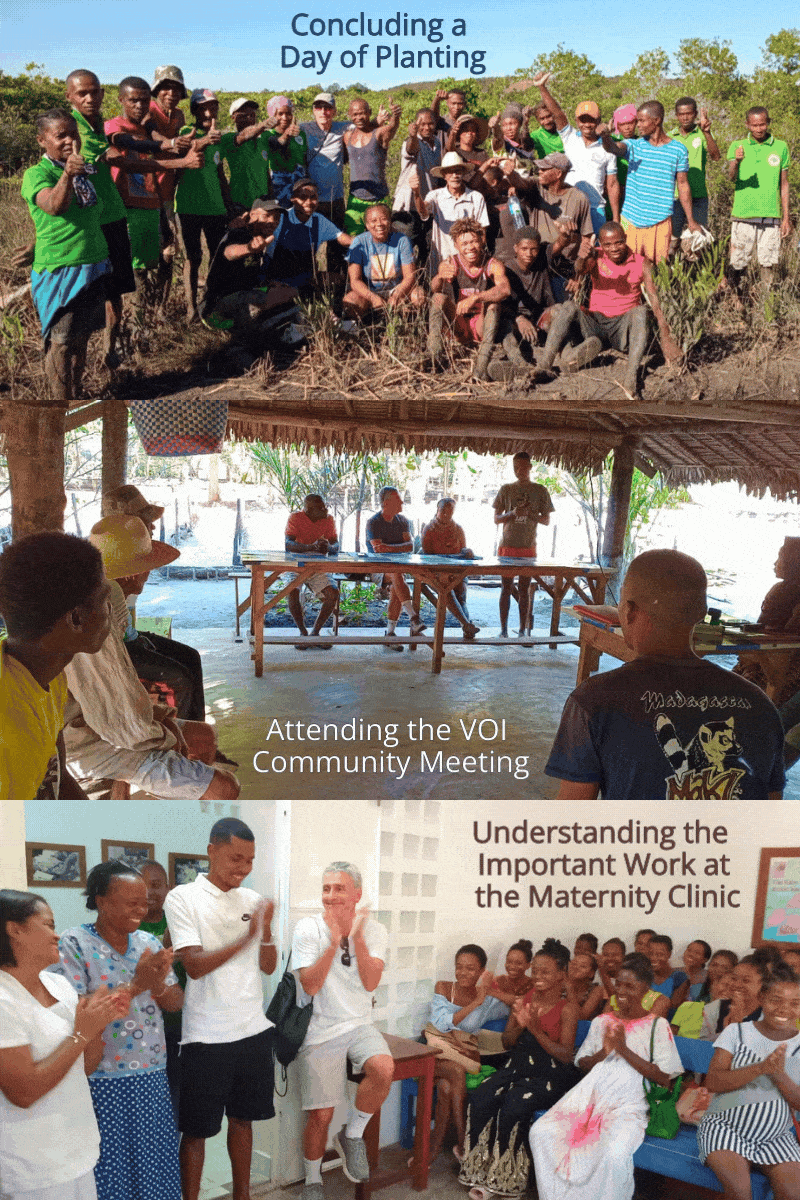
Later that week, I visited Sarobidy Maternity Center, another partner nonprofit in nearby Mahajanga. That earlier conversation with Antonio made the experience deeply poignant. It also reinforced how essential community-based healthcare is to long-term conservation success. Healthy families are better able to steward their land, participate in restoration work, and build resilient futures.


Immersed in Community-Based Mangrove Restoration
Community-based mangrove restoration in Madagascar depends on deep local knowledge—of tides, salinity, soil conditions, and species behavior—that has been passed down through generations.
Our nonprofit’s partnership with VOI Taratra supports large-scale mangrove restoration by ensuring that local teams are trained, paid, and equipped to lead every stage of the process. The work itself is guided entirely by Indigenous ecological knowledge.
During this visit, VOI President Papa Eric invited me to join the team for a day of planting. Before we set foot in the mud, there were two essential lessons in mangrove biology to understand.
First, mangroves reproduce through propagules—elongated seedlings that begin germinating while still attached to the parent tree. While nature produces many propagules, only a small percentage survive due to overcrowding and shade.
Second, mangroves are among the few plants that thrive in saltwater-saturated soil. Each species has a specific salt tolerance, determining where it belongs within the tidal zone. Successful restoration requires planting the right species in exactly the right place—something local communities understand intuitively.
My day began by sorting propagules by species, following practices refined over generations. Then came the real work: wading knee-deep into nutrient-rich mud to plant them by hand.


It was physically demanding and far outside my comfort zone. My contribution to the roughly 200,000 mangroves planted each year by the community was a decidedly modest fifty trees.
Yet despite the conditions and limited material resources, the day was filled with laughter and warmth. Even with language barriers, I felt fully welcomed. Working alongside our local partners offered a powerful reminder that joy and dignity are not dependent on wealth—and that restoration is as much about relationships as it is about ecosystems.
Restoring Mangroves and Livelihoods Together
Madagascar has the third-highest rate of extreme poverty in the world, with roughly 70% of the population living on less than $2.15 a day. In coastal regions, poverty and environmental degradation are deeply intertwined.
Our community-based mangrove restoration project in Madagascar directly links ecological recovery to meaningful work and fair income. Through Purpose on the Planet’s support, local residents are employed as tree planters, forest guards, nursery managers, and conservation champions—turning restoration into reliable income.
This model helps break cycles of poverty that often drive deforestation and overharvesting. When communities are paid to restore and protect mangroves, ecosystems recover—and families gain stability, food security, and hope.
Do We Really Understand Rural Poverty?
On my final full day, I attended a VOI meeting at the community’s open-air office. As the discussion wrapped up, Papa Eric asked a simple, unexpected question:
“Do people in rich countries know that there are people who live like we do?”
Honesty was the only appropriate response, but I struggled internally. How could I be truthful while also conveying hope?
Through a translator, I shared that most people are aware—at least at fleeting intervals. But daily pressures often push that awareness aside. That, I explained, is precisely why visits like ours matter so much. Personal relationships don’t fade as easily. They inspire sustained action, deeper engagement, and a desire to educate others.
When people connect personally, awareness turns into responsibility. So, these firsthand experiences also become the most powerful tools we have for raising awareness and building broader support.
In that moment, Papa Eric helped crystallize the importance of Purpose on the Planet’s dual mission. Supporting local communities and biodiversity hotspots remains our core focus. But education and outreach are equally essential. Lasting change requires winning hearts and minds—and one of the best places for that to start is by sharing stories that connect people across vastly different worlds.


Help Community-Based Mangrove Restoration in Madagascar

Every $20 contribution to Purpose on the Planet funds a full day of paid work for local villagers to plant and protect 45 mangroves—strengthening vital ecosystems while supporting families and livelihoods.
Supporters also receive a monthly enrichment series showing how their contribution advances 12 of the UN’s 2030 Sustainable Development Goals, reflecting a wider impact on landscapes, lives, and livelihoods.
By funding community-based mangrove restoration in Madagascar, you help ensure that local communities continue the effort to restore forests, protect biodiversity, and build resilient futures.

View an Interactive Playbook on how a Climate Change Donation Creates 4-in-1 Climate Action

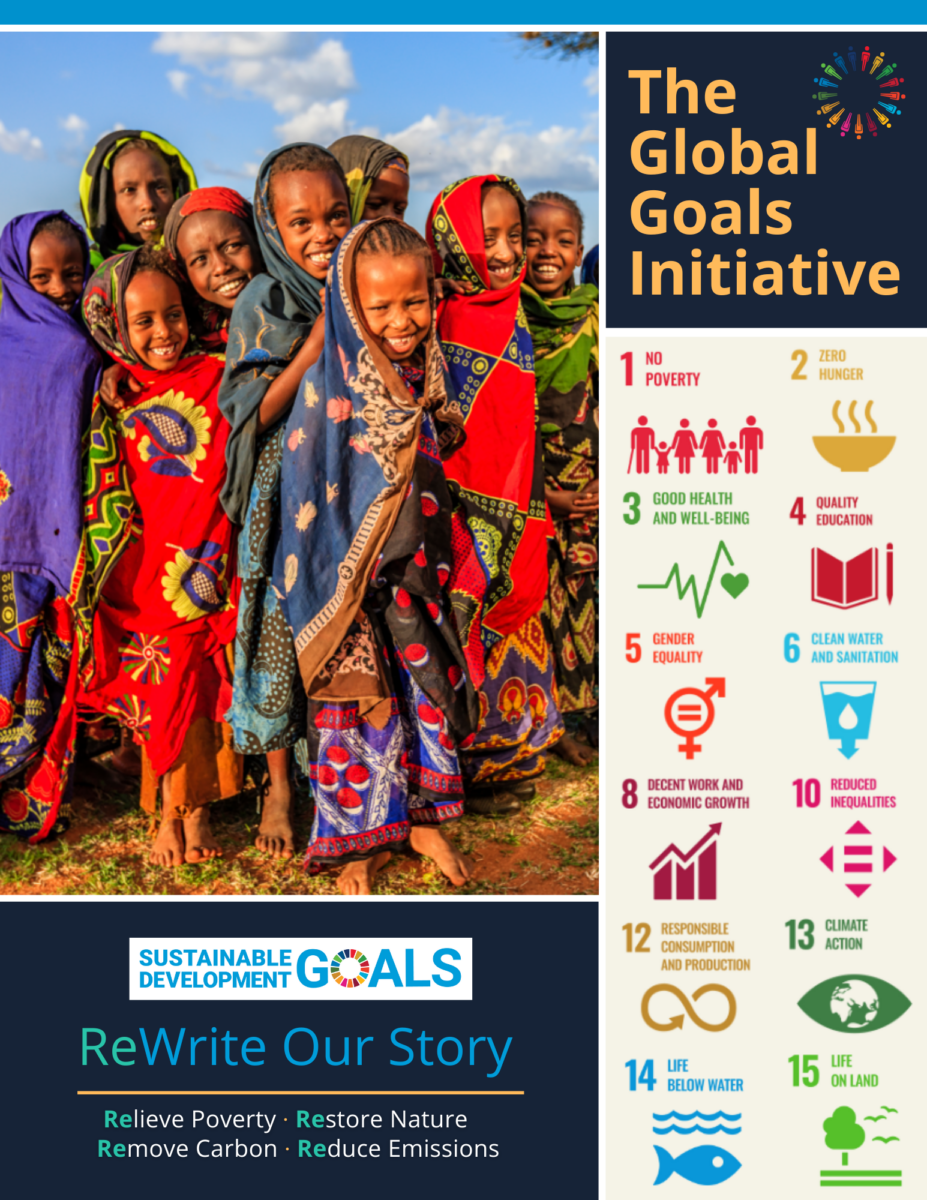
See an Interactive Impact Report on How You Can Impact 12 of the World’s 2030 Global Goals


Explore an Interactive Version of “The Climate Positive Carbon Footprint Offset Program”