Restoring Mangrove Forests in Madagascar
See how our humanitarian & environmental nonprofit mission is impacting the Red Island
Recruit & Restore
Socioeconomic Impact
Environmental Impact
Mangrove Forests

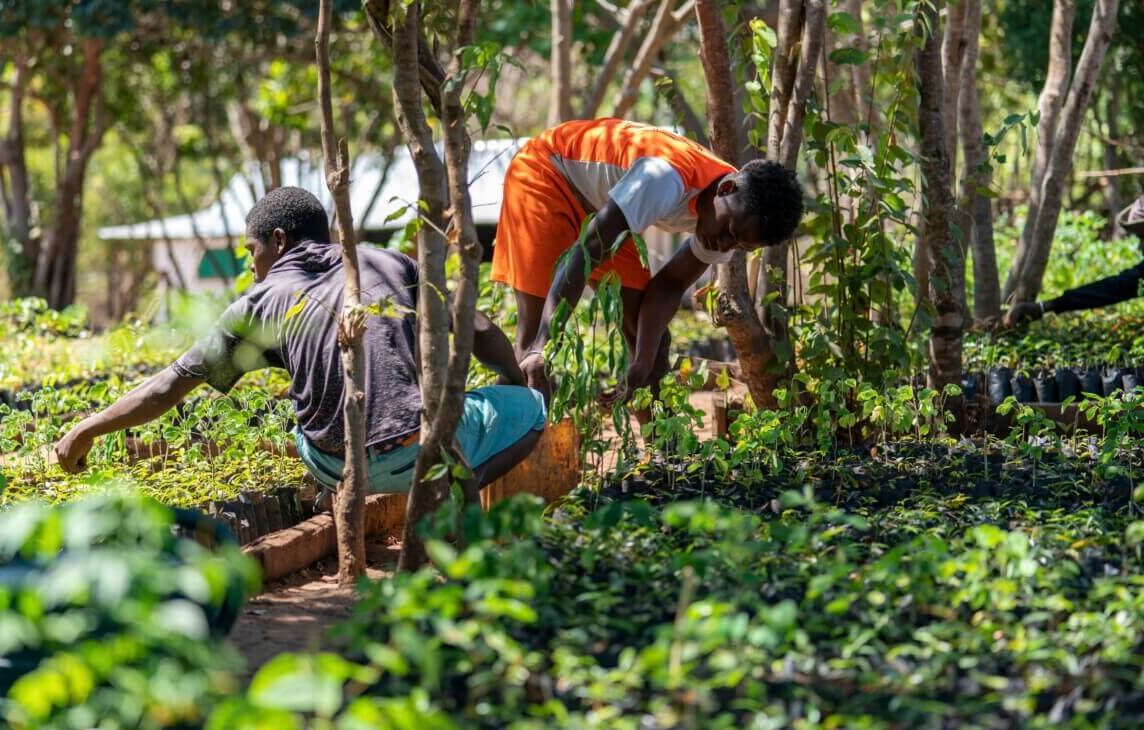
VOI is a Malagasy expression — Vondron’Olona Ifotony — that translates into “Local people love the forest.” It’s an organization made up of volunteers from local communities in areas where key natural resources exist.
In fact, Madagascar is one of the first countries in the global south to implement a legal national framework for community-led management based around VOIs.
A proven 10-year track record of restoring mangrove forests
Our program supports over 1000 acres of state-owned forest around the village of Antsanitia, which the Malagasy maintain was officially entrusted to the community members of VOI Taratra in 2012. In the past decade, these land management rights have been granted for 2-year periods, with any extensions deemed contingent on the community’s demonstration of consistent progress in the protection and restoration of the entrusted land.
After 3 successful 2-year extensions granted respectively in 2014, 2016 and 2018, the state has since chosen to entrust the land to the community members of VOI Taratra with a grant that extends to 2030! This is the period that Purpose on the Planet has also adopted for supporting the efforts of VOI Taratra, with the stated goal of advancing the community successfully on the path to sustainable self-sufficiency.
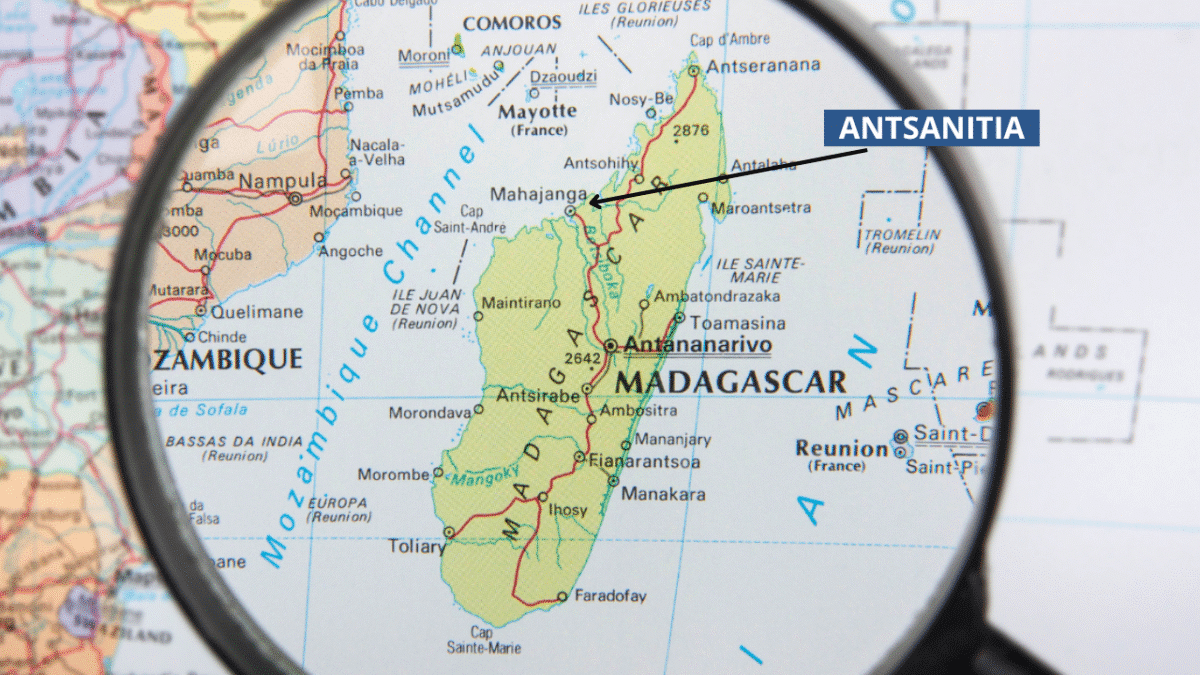
madagascar: the world’s fourth largest island
A dual humanitarian and environmental nonprofit mission
Through our work as part of the Accelerated Restoration Collaborative and by focusing on vital mangrove ecosystems, we’re using our “Recruit & Restore” methodology to create an immediate impact on human well-being, as well as long-term climate adaptation and resilience for the villagers around Antsanitia. The valuable work of restoring mangrove forests is currently creating life-changing opportunities for the members of VOI Taratra. As a result, the last decade at Antsanitia has seen many significant positive changes to both the forest and the lives of the people, as they restore their native ecosystems. These results are a testament to the positive impact of our humanitarian and environmental nonprofit mission, and also to the power of combining nature-based solutions with community-led forest management.
Just as importantly, the proven fair wage employment practices that we have introduced and the unique conditions that exist at our project site in Madagascar, enable us to multiply several-fold the social and environmental benefits of every dollar our donors commit. By supporting a Recruit & Restore approach to transform this vital mangrove ecosystem, we are simultaneously helping to fight extreme poverty and restore nature at scale, AND to enhance climate resilience and sequester CO2 with optimal efficiency.
It’s our nonprofit mission to improve livelihoods while also tackling climate change
Madagascar lays claim to the third highest rate of extreme poverty in the world: 70% of its people live off less than $2.15 a day. Our community-based mangrove forest restoration project in the country offers an invaluable path for transforming a spiral of poverty-based decline into a virtuous cycle of positive development. Here’s how.
Understanding the Drivers of Deforestation
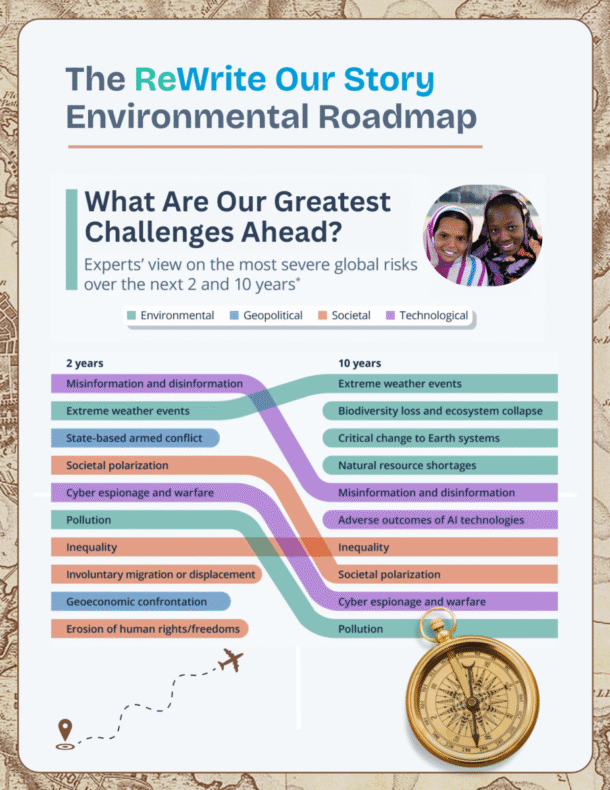
The key driver of deforestation may surprise you: its extreme poverty. In an effort to put food on their families’ tables, caring parents are being driven to cut down their local forests as a means of earning even meagre wages. In turn, these desperate actions set into motion a sequence of negative outcomes that make local conditions even more challenging to endure.
in 1 minute: See your impact on human lives
As forests diminish, available food sources decline. Extreme weather events increase, too, creating a cycle of droughts and flooding that also lower the region’s aquifers and gradually erode fertile topsoil.
Fighting Extreme Poverty through Recruit & Restore Projects
As a member of the Accelerated Restoration Collaborative, we’ve drawn on the proven impact of a Recruit & Restore methodology, which has been changing lives in Madagascar since 2012. This transformative principle enables our environmental charity to provide employment opportunities for members of VOI Taratra, including new jobs that range from security work to tree planting. Whether on a part-time or full-time basis, we commit to financially supporting all community members at levels at least 30% above the national minimum wage.
While our program helps put local communities on the path to social self-sufficiency, we are beginning to turn our attention toward a next phase of progress: This developmental phase is aimed at helping VOI Taratra re-establish a productive seedling nursery. Prior to the pandemic and the withdrawal of non-governmental funding, the nursery had been set to produce around 250,000 trees per year.
Let’s not forget, either, that — every day, already — our work is creating improved livelihoods and increased household incomes for the local communities around the village of Antsanitia. … And that’s only the beginning of the social benefits delivered by environmental charity, as you can see below!
in 30 seconds: hear the personal impact
An environmental nonprofit can also create a chain reaction of positive change for families & communities
Poverty inevitably also leads to poor health, limited access to education, and reduced lifetime potential. However, our employee surveys have reported a range of positive changes in families’–
- Abilities to meet basic food needs
- Access to health services, clean water sources, and grade schools
- Abilities to pay off debts, and even start micro-enterprises
Here’s why this matters so much in rural Madagascar…
Hunger, Health and Education
In the latest Global Hunger Index, Madagascar ranks 124th out of the 128 countries who provided sufficient data for a recent study. The island’s hunger level is classified as “alarming,” with 48.5% of population undernourished, and a 5% mortality rate for children under the age of 5.
By providing sustainable livelihoods and increased income, our program not only empowers families to feed household members, but also to gain better access to primary health care services. As context, only 23 countries have a higher maternal mortality rate than Madagascar, plus the infant mortality rate stands at 23 deaths per 1,000 live births. Additional income would help the communities make a start on addressing these specific issues:
- Earlier detection and management of birth complications
- Medical oversight in cases of dangerous gastrointestinal complications and pneumonia
- Enhanced awareness of nutrition and breastfeeding protocols
- Mosquito nets & life-saving drugs to prevent and treat malaria
Education is a vital key to escaping poverty and reducing inequality, yet 19% of the region’s children in sub-Saharan Africa don’t attend school. In addition, due to a lack of clean water and sanitation, many attending pupils frequently fall ill and have to miss classes, further hampering their ability to advance their education.
Our surveys indicate that our program also plays a part in getting needy children into school. We want to introduce you to Maman’i Kambana. Since 2014, she has been employed at our Madagascar project location, helping to restore mangrove forests. When she started, her income was so meagre that she couldn’t send her two children to school. But not so now!
Hear in her own words how today she actually supports her two children as full-time students, thanks in part to help from our program!
How restoring mangrove forests protects coastlines, communities, and oceans
Everything about the world’s oceans – temperature, chemistry, currents, life itself – drive the global systems that make Earth habitable for humans. That’s why it’s critical to effectively manage this vital resource, both for humanity and to counteract the effects of climate decline.
The Magical Forests Between Land & Sea
Here’s why our support of mangrove restoration work in Madagascar is so vital. Destruction of coastline mangrove estuaries has caused mudflats to wash into the ocean, destroying once-productive fisheries, while increasing coastal vulnerability to natural disasters such as hurricanes, tsunamis, and floods.
In 1 minute: discover mangrove superpowers
Mangroves are so important because they are central in the realm of healthy marine ecology. In tropics around the globe, mangroves anchor coastlines, and they also form a vital link between land and sea. Plus, their adaptation to highly saline waters and soils has produced astounding biological traits. For example, they can actually excrete salt or obtain oxygen through “breathing” pores!
And that’s not all: Mangroves shed leaves and branches that disperse and transfer essential nutrients into the marine environment, supporting intricate marine and terrestrial food webs.
Providing Vital Habitats for Marine Life
Over 3 billion people worldwide depend on marine and coastal biodiversity for their livelihoods. Our community at Antsanitia is a prime example! It’s a fishing village that in the past has relied on the presence of healthy mangrove and ocean systems for food and income. Here’s how it happens:
Crabs comprise the main catch for fishermen in this region, and crabs’ habitat is dependent on mangrove forests. However, deforestation and the degradation of land have led to a steady decline in crab numbers in recent years. So, the fact that our environmental charity is restoring the mangrove forests is helping to reverse this trend for the local community, as well.
When I was younger, it was much easier to find large crabs because there were more mangroves. When people are logging mangroves, there are fewer crabs. Crabs thrive in mangroves.
Soso Barofa, Fisherman, Marine Community Conservancy
restoring mangrove forests & blue carbon sinks
How restoring mangrove forests offers three powerful forms of global climate action
90% of Madagascar’s plant and animal species are endemic to the island but 90% of its primary forests have been destroyed in recent years! Today we’re finally recognizing that promoting the sustainable use of our ecosystems and preserving biodiversity are not just causes: They are literally the keys to our survival. By supporting the restoration of mangrove forests, you are actually delivering a three-pronged environmental benefit that directly anticipates and mitigates the worst effects of climate change.
Efficient Carbon Sequestration
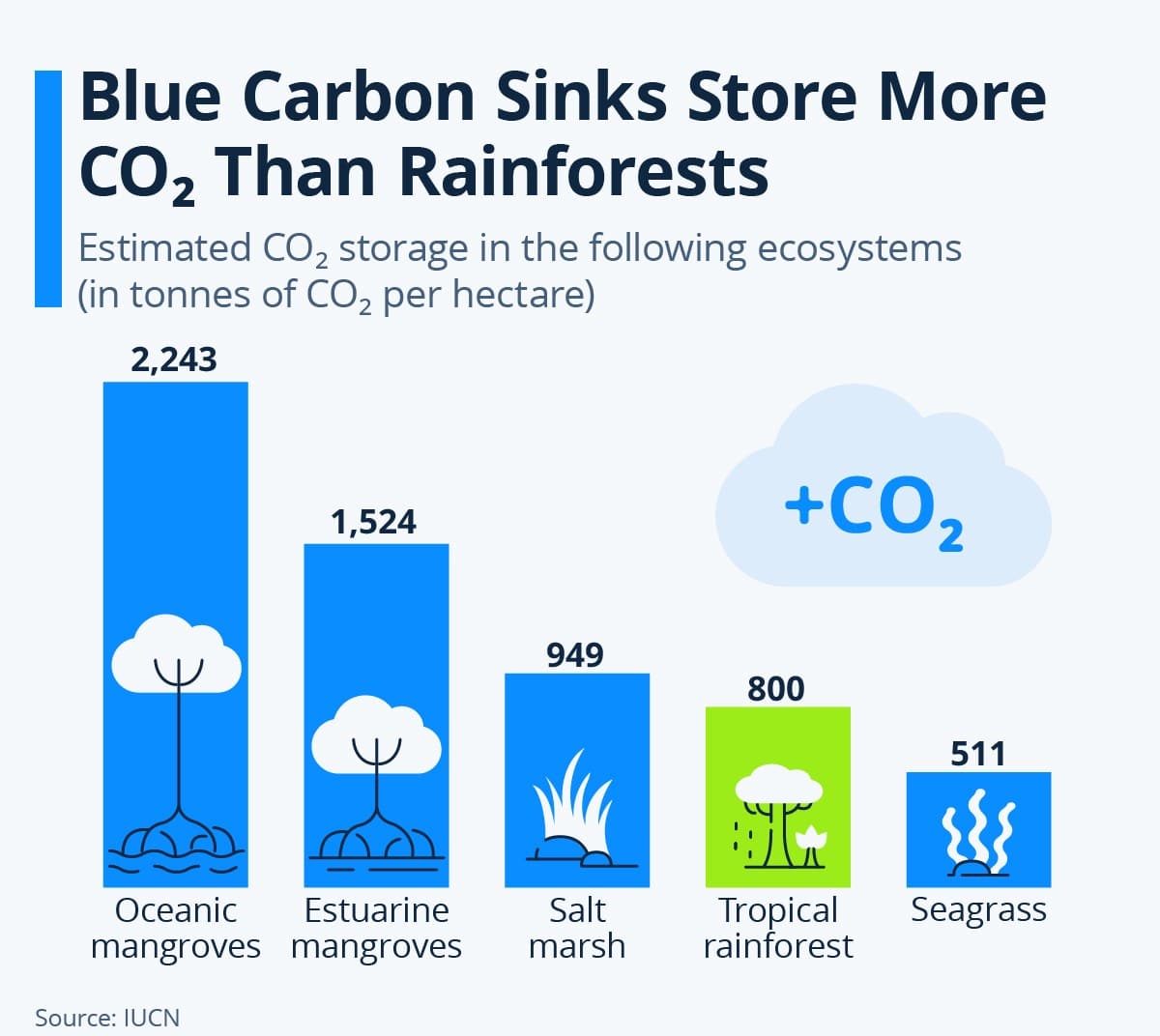
Mangroves store more carbon per land unit than any other ecosystem on Earth. Mangrove forests cover just 0.1 percent of the planet’s surface but store up to 10 times more carbon per hectare than terrestrial forests. This carbon-storing superpower makes mangroves a critical part of the solution to climate change.
Climate Resilience & Adaptation
In addition, mangroves form a flood barrier that protects vulnerable coastlines and coastal communities from the impacts of extreme weather events, like rising seas and flooding. Unfortunately, studies indicate that such incidents will only become more frequent and intense in coming years, which makes the need for environmental charity projects that can provide enhanced climate resilience all the more critical.
Forests and Biodiversity
Biodiversity is fundamental to so many essential functions of everyday life, including oxygen production, drinking-water filtration, soil fertility, plant pollination for crop production, coastal erosion protection, and much more! Also, a rich diversity of life facilitates medical discoveries, economic advances, and fresh responses to global challenges.
Despite biodiversity’s key role in our planet’s survival, there is imminent danger on the horizon. Alarming evidence tells us that biodiversity is declining faster than at any other time in human history. In fact, the number of wildlife populations around the world has shrunk by nearly 70% in the last 50 years alone!
However, forests are home to more than 80% of all terrestrial species of animals, plants and insects. Our new and restored mangrove forests directly support biodiversity in Madagascar, which is a critical biodiversity hotspot, — home to 90% of all endemic plant and animal species on the island!
Support Our Dual Nonprofit Mission by Restoring Mangrove Forests
Create Work for Restoring Mangrove Forests
If you make a monthly donation, we’ll plant an extra 60 mangroves for you!
Impacts start at $10
Become Climate Positive Today
Make a tax-deductible donation and opt to be carbon negative this year
Only $20/month
Impact 12 of the UN’s 2030 Global Goals
We’ll also share monthly insights on the difference that you’re making!
Impacts start at $20
DAF Donations: Learn More About Using Donor-Advised Funds to Make a DAF Donation or Nonprofit Grant in Four Simple Clicks
privacy and SECURITY
Top 1% in Transparency
The founders of our environmental charity cover 100% of our general operating expenses with a very specific purpose: This means our donors confidently trust that 100% of every donation they make goes directly toward the environment and the positive humanitarian outcomes that our programs have been created to deliver.
The Platinum Seal of Transparency is a rating that puts Purpose on the Planet in the top 1% of charities nationally in terms of transparency. It means that we have shared clear information with the public about our goals, strategies, capabilities, achievements and progress indicators, as a trusted environmental charity.
Measurable Deliverables
Our programs are structured around measurable result requirements that are carefully implemented and reconfirmed for every donor dollar taken in. Likewise, all of our donors are updated on the collective, documented progress toward stated goals via our annual Impact Report.
To better understand the challenges our program addresses, as well as the benefits delivered on the ground by our environmental charity, donors can expect to receive continuous insights and tips into the tangible (and “do-able”) ways they can contribute to more effectively ensure a prosperous future.