Sustainable Living Tips for the 2030 Goals & SDG Targets
a complimentary 12-Month series of Practical Ways to Create Positive Change while Impacting 12 areas of the SDG Goals List
Sustainable Development Goals #1- 4
Sustainable Development Goals #5-10
Sustainable Development Goals #12-15
Sustainable living is rooted in choices we make every day
Creating a more sustainable future begins with the choices we make every day. Whether reducing waste, conserving water, supporting biodiversity, or making more responsible purchasing decisions, sustainable living helps improve both environmental and community well-being.
The United Nations’ 2030 Sustainable Development Goals (SDGs) provide a global framework for addressing poverty, health, education, climate change, biodiversity, and many other challenges. Behind each goal are specific SDG Targets that identify practical actions needed to achieve measurable progress by 2030.
This Sustainable Solutions series connects those global targets with practical sustainable living tips that individuals, families, schools, workplaces, and communities can adopt in everyday life.
While no single action solves every challenge, millions of small actions together can create contagious behavior, more sensitive thinking and meaningful progress toward the 2030 Goals.
Explore the modules below to discover practical ways to help advance the SDG targets while creating healthier communities and a more sustainable future.
Reducing poverty requires more than charitable giving alone. Supporting local economic opportunity, fair employment, workforce development, and community-based initiatives can help create pathways toward greater financial stability and resilience. This module explores practical ways individuals can contribute to stronger and more equitable communities.
Sustainable Solutions: Discover Today’s Tools for Tackling Poverty
Impact SDG Targets:
Poverty Alleviation • Social Protection • Equal Access to Resources • Economic Opportunity

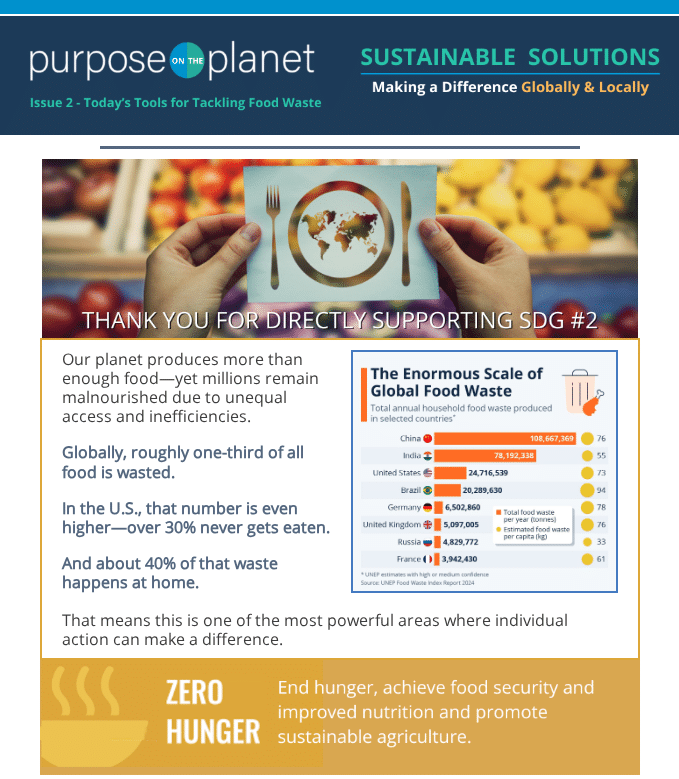
Food security depends on healthy food systems, resilient communities, and responsible resource management. This module explores practical ways to reduce food waste, support local food production, and contribute to more sustainable and equitable food systems, all through a Learn, Adopt, Model & Nudge mindset.
Sustainable Living Tips: Discover Today’s Tools for Reducing Food Waste
Impact SDG Targets:
Food Waste • Community Resilience • Sustainable Systems • Food Insecurity
Good health is influenced by the environments in which we live, work, and play. This edition explores how the three central principles of a Circular Economy can fundamentally support physical, mental, and community well-being while promoting healthier and more sustainable lifestyles.
Sustainable Living Tips: A Circular Economy for Healthier Communities
Impact SDG Targets:
Public Health • Disease Prevention • Health Promotion • Community Well-Being

Education helps unlock opportunity, strengthen communities, and prepare future generations to address complex challenges. This module explores practical ways to support lifelong learning, literacy, mentorship, and educational access.
Impact SDG Targets:
Education • Lifelong Learning • Literacy • Community Empowerment
Creating equal opportunities for women and girls strengthens families, workplaces, and communities. This installment explores practical actions that support inclusion, empowerment, and greater equity across society.
Impact SDG Targets:
Gender Equality • Women’s Empowerment • Inclusion • Social Equity

Access to clean water supports public health, livelihoods, and economic development. This module explores how ecosystem restoration and sustainable resource management can help protect freshwater resources while supporting community well-being.
Impact SDG Targets:
Clean Water • Water Conservation • Climate Action • Sustainable Living
Thriving communities depend on meaningful employment, sustainable businesses, and economic opportunity. This installment explores practical ways to support responsible business practices, workforce development, and resilient local economies.
Impact SDG Targets:
Decent Work • Economic Opportunity • Sustainable Business • Workforce Development

Inclusive communities create greater opportunity and resilience for everyone. This module explores practical actions that help promote fairness, accessibility, and equal opportunity while strengthening social cohesion.
Impact SDG Targets:
Social Equity • Climate Justice • Economic Opportunity • Community Development

Addressing climate change requires action at every level of society. This module explores practical ways individuals can reduce emissions, improve resilience, and support solutions that contribute to a more stable climate future.
Impact SDG Targets:
Climate Resilience • Carbon Emissions Reduction • Sustainable Living
Oceans and coastal ecosystems play a vital role in supporting biodiversity, livelihoods, and climate stability. This installment explores practical actions that help protect marine environments and reduce pressures on ocean ecosystems.
Impact SDG Targets:
Ocean Conservation • Marine Ecosystems • Coastal Protection • Biodiversity Loss

Healthy forests, grasslands, wetlands, and wildlife habitats provide essential benefits for people and nature alike. This final module explores practical ways to support biodiversity, habitat restoration, and ecosystem conservation.
Impact SDG Targets:
Biodiversity • Wildlife Conservation • Reforestation • Ecosystem Restoration
Frequently Asked Questions About Sustainable Living and the 2030 Goals
What is sustainable living?
Sustainable living means making everyday choices that reduce environmental impacts, conserve natural resources, and support healthier communities. Simple actions such as reducing waste, conserving water, choosing sustainable products, and protecting biodiversity can collectively contribute to a more sustainable future.
What are some easy sustainable living tips anyone can start today?
Many sustainable living tips require little or no cost. Reducing food waste, carrying reusable bags and bottles, conserving water and energy, supporting local businesses, recycling correctly, and protecting natural habitats are practical ways to reduce your environmental footprint while supporting broader sustainability goals.
What are the 2030 Goals?
The 2030 Goals, officially known as the United Nations Sustainable Development Goals (SDGs), are 17 global goals adopted to address poverty, inequality, environmental protection, economic development, and climate change by the year 2030.
What are SDG Targets?
Each Sustainable Development Goal includes a series of specific SDG Targets that define measurable actions needed to achieve the goal. Together, the 17 goals include 169 targets covering areas such as education, health, biodiversity, clean water, climate action, sustainable consumption, and economic opportunity.
How does sustainable living help achieve the SDG Targets?
Everyday actions can contribute to many SDG Targets by reducing pollution, conserving resources, supporting responsible consumption, protecting ecosystems, and strengthening communities. While governments and organizations play an essential role, individual choices help drive collective progress toward the 2030 Goals.
Impact 12 of the 2030 Goals and Get a Complimentary Year of Sustainable Living Tips
Create Work & Income by Restoring Nature
Give monthly & we’ll plant 60 extra trees
Impacts start at $10
Support 12 of the UN’s 2030 Global Goals
We share monthly insights on your impact
Impacts Start at $20
Be Climate Positive by Removing CO2
Economically offset your CO2 footprint
Only $20/month
PRIVACY and SECURITY
Top 1% in Transparency
Our founders cover 100% of our general operating expenses with a very specific purpose: This means our donors confidently trust that 100% of every donation they make goes directly toward the environment and the positive humanitarian outcomes that our nonprofit programs have been created to deliver.
The Platinum Seal of Transparency is a rating that puts Purpose on the Planet in the top 1% of charities nationally in terms of transparency. It means that we have shared clear information with the public about our goals, strategies, capabilities, achievements and progress indicators for our nonprofit programs.
Measurable Deliverables
Our program is structured around tangible and measurable result requirements that are rigorously maintained for every donor dollar received. Likewise, all of our donors are updated on the collective, documented progress toward stated program goals via our annual Nonprofit Programs Impact Report.
To better understand the challenges our work addresses, as well as the benefits delivered on the ground by our nonprofit programs, donors can expect to receive continuous insights and tips into the tangible (and “do-able”) ways they can contribute to more effectively ensure a prosperous future.