
Offset Your Carbon Footprint Through Nature Restoration & Nature-Based Carbon Removal
An essential guide for maximizing your climate impact via nature restoration & nature-based carbon removal
p = planting
l = longevity
a = affordability
n = nature’s numbers
T = Trees and co2
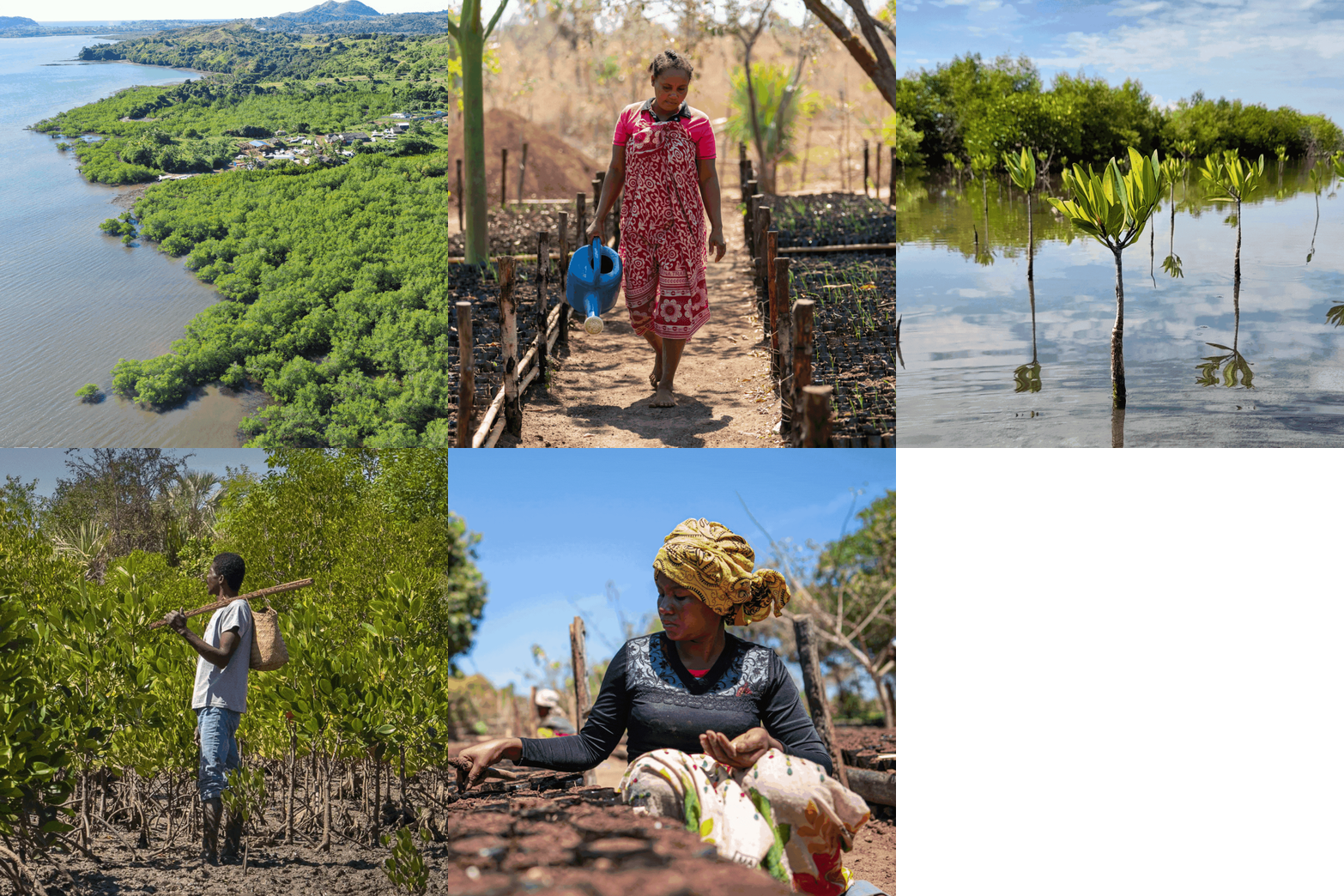

Can nature restoration help offset my carbon footprint and maximize the overall climate action benefits?
Every day, our homes, travel, food, and purchases add to carbon dioxide (CO₂) levels. Reducing those emissions should always be our first priority. But even as we make lower-carbon choices, many of us also want to take responsibility for the emissions we cannot yet eliminate.
One increasingly important way to do that is by supporting nature restoration—helping restore the natural ecosystems that absorb carbon dioxide from the atmosphere while providing benefits that extend far beyond carbon.
Why Nature Restoration Matters for Climate Action
Climate change is only one of the environmental challenges we face.
Around the world, forests, wetlands, mangroves, grasslands, and other ecosystems are under increasing pressure from deforestation, habitat loss, pollution, and changing weather patterns. Restoring these natural systems can address many of these challenges simultaneously, all the way from biodiversity loss to water and food insecurity.
Healthy ecosystems naturally remove CO₂ from the atmosphere through photosynthesis, storing carbon in vegetation and soils. This process is known as nature-based carbon removal.
At the same time, healthy and restored ecosystems can:
- Protect biodiversity and wildlife habitat.
- Improve freshwater quality and availability.
- Reduce soil erosion.
- Increase resilience to droughts and floods.
- Support sustainable livelihoods for local communities
This is why nature-based solutions are increasingly recognized as an important complement to reducing greenhouse gas emissions. Restoring nature does not replace the need to reduce fossil fuel use and other carbon sources—but it can help rebuild the natural systems that regulate our climate while delivering benefits that extend far beyond carbon alone.
Understanding the Difference: Nature Restoration, Nature-Based Carbon Removal & Carbon Offsets
These terms are closely connected, but they describe different things.
Nature restoration is the process of restoring degraded or damaged ecosystems so they can once again function as healthy, resilient natural systems.
Nature-based carbon removal is one of the benefits that healthy and restored ecosystems can provide: removing CO₂ from the atmosphere and storing it in trees, vegetation, soils, and other natural carbon reservoirs.
Nature-based solutions is the broader concept of using the protection, restoration, or sustainable management of natural ecosystems to address societal challenges—including climate change, biodiversity loss, water security, and community resilience.
Carbon offsets, meanwhile, are a broader climate-accounting approach through which emissions reductions, avoidance, or removals from one activity or project may be used to compensate for emissions elsewhere. Some projects generate verified carbon credits that can be purchased and retired to make formal offset claims.
For businesses and other organizations with formal emissions-accounting requirements, verified carbon credits can therefore be an important mechanism for financing and accounting for climate action. They also involve additional processes for measurement, verification, certification, and issuance.


On contrast, individuals and families who want to help offset their carbon footprint do not necessarily need to purchase a carbon credit to make a meaningful contribution to climate action. Instead, they can choose to directly support high-quality nature restoration projects that are designed to remove atmospheric CO₂ while delivering wider benefits for nature and communities.
The goal isn’t simply to purchase an environmental instrument. It’s to support nature restoration that can reliably contribute to long-term carbon removal while maximizing benefits for climate, nature, and communities.
Why forest restoration is so vital for nature-based carbon removal
Nature restoration encompasses many ecosystems—from forests and mangroves to wetlands, peatlands, grasslands, and coastal habitats. Together, these natural systems play an important role in removing and storing atmospheric carbon while supporting biodiversity and strengthening ecological resilience.
Forests are particularly powerful because they can combine substantial long-term carbon storage with some of the broadest ecological and social benefits of nature restoration.
Restoring a degraded forest can therefore achieve several objectives at once: trees and soils can accumulate carbon, wildlife habitat can return, watersheds can be protected, soils can recover, and local communities can gain sustainable livelihoods from restoration and stewardship.
For someone looking to help offset a carbon footprint through nature restoration, this makes well-designed forest restoration an especially compelling nature-based solution.
However, if your objective is specifically to support tree planting and incremental nature-based carbon removal, you need to understand exactly what a project is doing—and whether the environmental benefits it describes come from new carbon removal, potential avoided emissions, or both.
That’s why the PLANT Framework was developed: To provide a practical roadmap to help individuals and families identify high-quality nature restoration projects capable of delivering long-term nature-based carbon removal and proven environmental outcomes.

Introducing the PLANT Framework: Five questions to help you maximize your climate impact through nature restoration
Choosing a nature restoration or carbon project doesn’t have to be complicated.
The PLANT Framework provides five practical questions to help individuals and families evaluate whether a project is designed to deliver meaningful, measurable, and lasting environmental impact.
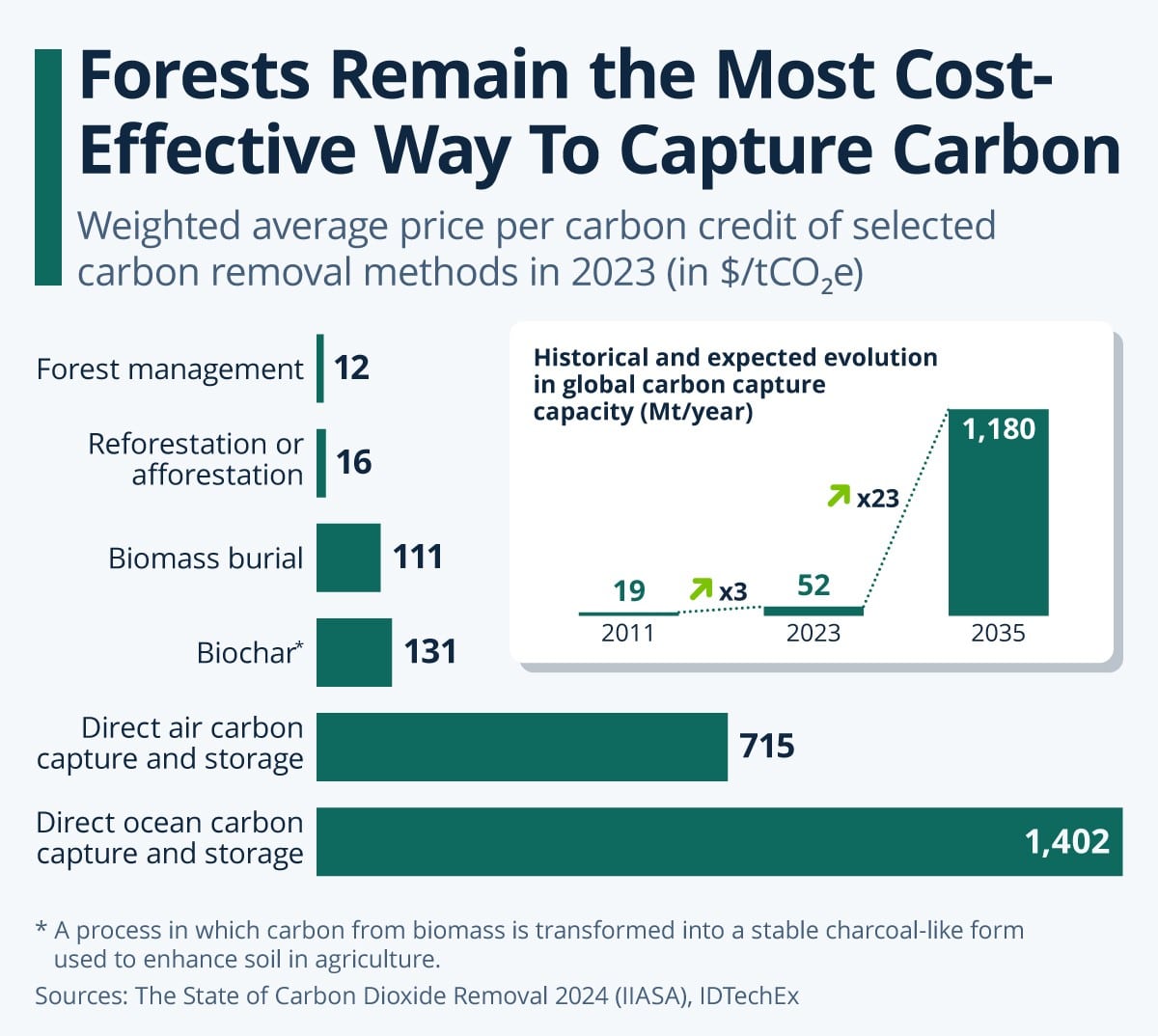
Rather than focusing simply on marketing assertions about CO₂ to be removed and/or avoided, or the number of trees planted, the framework looks at the factors on the ground that determine whether a forestry-based project is properly-positioned to support long-term sequestration outcomes and that the nature restoration can continue delivering benefits for people, nature, and the climate for decades to come.
| Question | PLANT Principle |
|---|---|
| Does this nature-based carbon removal project actually plant trees to sequester more CO2? | P – Planting |
| Will these restored ecosystems still be thriving decades from now? | L – Longevity |
| Is my support of nature restoration creating the greatest possible environmental impact? | A – Affordability |
| Is the environmental impact of the carbon removal project measured and reported? | N – Nature’s Numbers |
| How much atmospheric CO₂ can a nature restoration project remove over time? | T – Trees & CO₂ |
Taken together, these five questions provide a practical framework for comparing nature restoration projects, understanding different approaches to nature-based carbon removal, and helping maximize the long-term impact of every donation.
The first question may also be the most revealing.
Do all nature-based carbon offset projects plant trees, so that additional sequestration draws down more CO₂?

P – Planting: Do all nature-based carbon removal projects plant trees, so that additional sequestration draws down more CO₂?


One of the biggest misconceptions about carbon emission offset programs is that all forestry-based projects plant trees, so that additional sequestration will offset future emissions.
They don’t.
Many forestry-based climate initiatives focus entirely on protecting existing forests or improving forest management without planting a single new tree. These are still meaningful climate strategies, but they achieve their environmental benefits differently from projects that restore degraded landscapes by growing new forests.
Understanding this distinction is the first step in making informed decisions about nature restoration.
Five Types of Forestry-Based Carbon Offset Projects
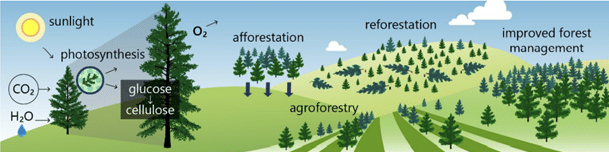
Forestry-based carbon offset programs can actually fall into one of five categories:
| PROJECT TYPE |
PLANTS TREES? |
CO2 IMPACT |
|---|---|---|
| Reforestation | ✓ | Carbon removal |
| Afforestation | ✓ | Carbon removal |
| Agroforestry | ✓ | Carbon removal |
| Improved Forest Management (IFM) | ✗ | Avoided emissions |
| REDD+ | ✗ | Avoided emissions |
In addition to protecting existing forests, the first three approaches also establish new trees that actively remove carbon dioxide from the atmosphere as they grow.
By contrast, Improved Forest Management (IFM) and REDD+ generally do not involve planting new trees. Instead, they focus strictly on protecting or managing existing forests to reduce the potential for greenhouse gas levels to increase even more rapidly in the future.
Carbon Removal vs. Avoided Emissions
One of the simplest questions that anyone looking to maximize his or her climate impact can ask is:
Is this project REMOVING additional carbon from the atmosphere, AVOIDING future emissions, or delivering a combination of both?”
Projects that restore degraded forests by planting new trees while protecting the native forests that remain can deliver both benefits. As newly planted trees grow, they remove incremental CO₂ from the atmosphere and create additional natural carbon storage over time. At the same time, protecting existing forests helps prevent the carbon already stored in those ecosystems from being released.
Projects that simply conserve existing mature forests, by contrast, primarily avoid future emissions by preventing deforestation or degradation.
That doesn’t make forest protection any less important—protecting mature forests is still one of the world’s most important climate strategies. However, it is fundamentally different from a carbon offset tree planting program that both establishes new forests for additional carbon removal and protects those forests and the existing native ecosystems from future loss.
Understanding this distinction is particularly important if your objective is to support tree planting and incremental nature-based carbon removal as a way to help offset your carbon footprint—by contributing to the removal of additional CO₂ from the atmosphere that would not otherwise have occurred, while also protecting the carbon already stored in existing forests.
Native Forest Restoration Creates Greater Long-Term Value
Once you’ve established whether a project genuinely involves tree planting, the next question becomes how those forests are being restored.
Scientific research consistently shows that restoring diverse native ecosystems produces broader and more durable environmental benefits than establishing single-species plantations. Although restoring native forests typically requires greater planning, careful species selection, and ongoing stewardship, these projects are far more likely to deliver lasting climate benefits than short-term planting campaigns. Healthy native forests can:
- Remove and store atmospheric CO₂ over many decades.
- Restore habitat for wildlife and pollinators.
- Improve soil quality and reduce erosion.
- Protect rivers, wetlands, and freshwater systems.
- Increase resilience to drought, pests, and extreme weather.
- Support sustainable livelihoods alongside environmental recovery.
This is why many leading restoration organizations are now increasingly prioritizing ecosystem restoration over short-term planting of forests that have not previously existed at a project site.
Once you’ve established that a project genuinely involves tree planting, and ideally native forest restoration, the next question becomes equally important:
Will those forests still be thriving decades from now?
L – Longevity: Will the restored ecosystems at your nature- based carbon removal project be thriving decades from now?
Planting trees is only the beginning. The real measure of successful nature restoration is not how many seedlings go into the ground today, but how many healthy forests remain standing decades into the future.
Without long-term protection, forests remain vulnerable to logging, wildfire, agricultural expansion, and other pressures that can quickly reverse years of restoration work. This is why the most reputable forestry-based carbon removal projects invest just as much effort in protecting forests as they do in planting them.
Three factors are particularly important.
Community-Led Conservation
The most successful restoration projects don’t simply plant trees for local communities—they restore forests and ecosystems with them.
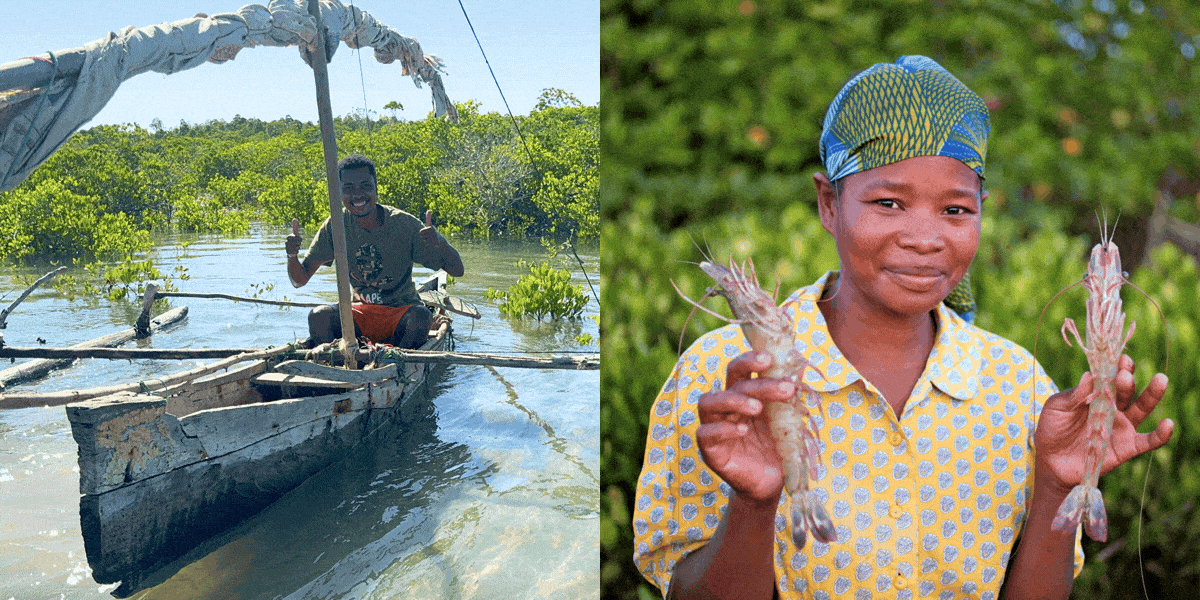
When communities are directly involved in forest management, monitoring, and protection, they become long-term partners in conservation. This approach creates employment and builds lasting stewardship that significantly improves local livelihoods and forest survival.
Community-based conservation has repeatedly demonstrated that environmental restoration and poverty reduction can work hand in hand, producing stronger outcomes for both people and nature.
Secure Land and Resource Rights
Long-term restoration depends on clear land ownership and management rights.
When local communities have secure legal authority to manage and benefit from their forests, they have greater incentive to protect them from illegal logging, land conversion, and unsustainable resource use.
The most effective forest conservation and carbon removal projects therefore invest significant time establishing or supporting secure community management arrangements before large-scale restoration begins.
Long-Term Protection and Stewardship
Every restoration project should have a comprehensive protection strategy, which includes:
- Community forest guardians.
- Fire prevention and response planning.
- Ongoing monitoring.
- Education to reduce the drivers of deforestation.
- Sustainable livelihood opportunities that reduce pressure on forests.
Without these safeguards, even well-planned planting programs can struggle to achieve lasting carbon sequestration and biodiversity gains.
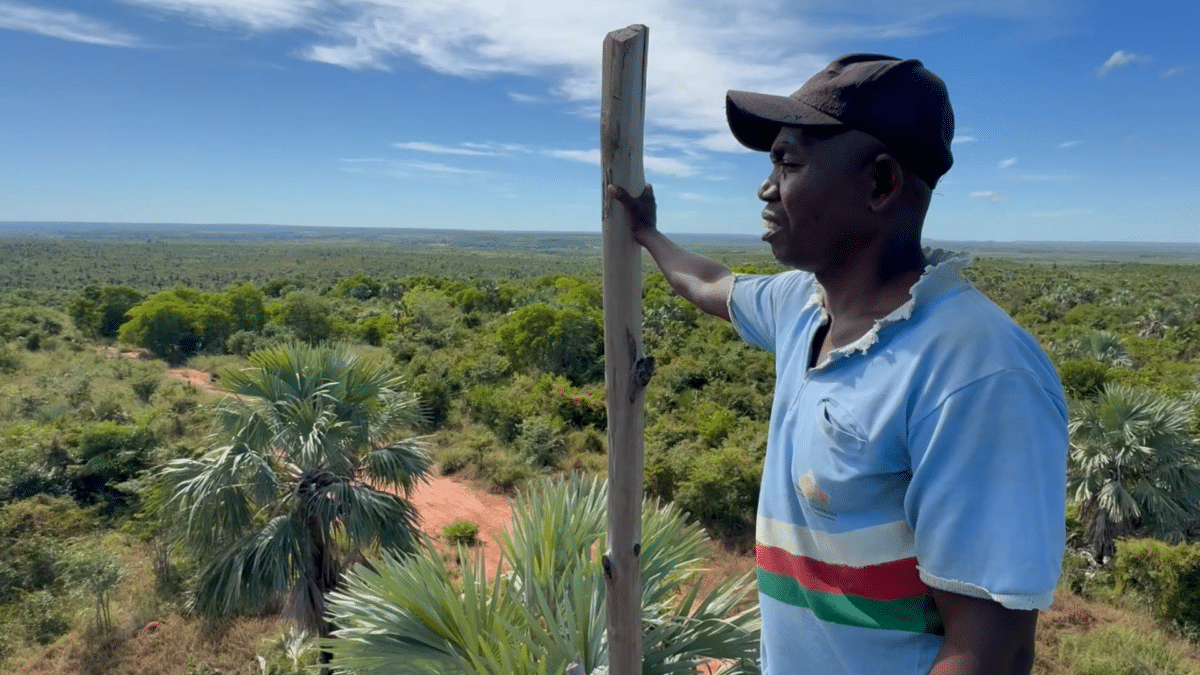


Longevity is a cornerstone consideration for nature-based carbon removal. As forests mature, they continue removing and storing atmospheric CO₂ while simultaneously improving biodiversity, freshwater quality, and ecosystem resilience.
Even the best-designed restoration project must also make effective use of every donor dollar. That brings us to the third element of the PLANT Framework—Affordability.
A – Affordability: Is your support of nature restoration creating the greatest possible environmental impact?


We should expect the strongest possible environmental and social benefit from every dollar invested in offsetting our ecological footprint and mitigating the impact of climate change.
While cost should never be the only factor when comparing carbon offset programs and the important work done by forest conservation and tree planting organizations, understanding how efficiently an organization uses its resources can help supporters maximize their impact.
One useful benchmark is the number of trees that can be responsibly planted for a given amount, provided high restoration standards are maintained.
For example, many organizations estimate that a $10 donation may plant between 5 and 10 trees. However, efficient community-led restoration models may be able to plant significantly more native trees without compromising quality, allowing environmentally-conscious individuals or businesses to achieve even stronger outcomes for a sustainable future.
Cost Efficiency and a Nonprofit Business Model Really Matters
Affordability is about much more than the cost of planting a tree. It also reflects how effectively an organization directs funding toward restoration activities rather than administrative overhead.
Many nonprofit forest conservation and tree planting charities operate with lean staffing models, strong volunteer support, or founder-funded structures that enable a greater proportion of contributions is invested directly into planting, conservation, community employment, and long-term forest management.
For individuals looking to maximize their carbon offset impact, this can translate into much greater environmental and humanitarian impact for every dollar invested.
Location Influences Carbon Sequestration
Where trees are planted also affects both cost and impact. Research suggests that trees growing in many tropical and subtropical regions generally sequester carbon more rapidly because favorable growing conditions support faster growth and higher biomass production. These forests can also provide exceptional biodiversity benefits while supporting communities living in areas where restoration creates meaningful employment opportunities.
This means that carefully designed tropical restoration projects may achieve substantial carbon removal while simultaneously protecting wildlife, improving livelihoods, and restoring degraded ecosystems.
In short, the best nature-based carbon removal projects should combine affordability with scientific best practices, transparent reporting, and long-term stewardship. True value isn’t simply about planting more trees—it’s about restoring ecosystems that continue delivering climate, biodiversity, and community benefits for generations.
As explained below, the best nature-based carbon removal projects can also clearly demonstrate that their restoration efforts are producing measurable results.
N – Nature’s Numbers: Is the environmental impact of a nature-based carbon removal project tracked and reported?
Planting trees, restoring forest and sequestering CO₂ is only meaningful if the results can be measured. The highest-quality nature restoration programs understand that restoring ecosystems is a long-term commitment. They don’t simply report how many trees were planted—they monitor how forests grow, how much carbon they remove, how biodiversity is recovering, and how local communities are benefiting.
This commitment to measurement, transparency, and improvement is what separates exceptional nature restoration programs.
Measurement, Reporting & Verification (MRV)
Leading restoration programs rely on Measurement, Reporting, and Verification (MRV) systems to assess progress and improve outcomes over time.
MRV may include:
- Measuring the number of trees planted.
- Monitoring tree survival and growth.
- Estimating carbon sequestration.
- Tracking biodiversity recovery.
- Using satellite imagery and drones to monitor forest health.
- Regular field surveys conducted by trained local teams.
Collecting this information enables organizations to refine nature restoration practices and track how well they are delivering meaningful, long-term environmental outcomes.
Tree Survival Is Just as Important as Trees Planted
A restoration project should never be judged solely by the number of seedlings planted. A million trees planted means very little if only a small percentage survive. Instead, one of the most valuable indicators of success is tree survival rate.
Well-managed projects often appoint local Tree Monitoring Champions or community forestry associations to oversee activities such as:
- Watering during establishment and weed control
- Pest management and fire prevention.
- Ongoing monitoring and data collection.
This local stewardship dramatically improves the likelihood that restored forests will mature into healthy ecosystems capable of storing carbon for decades.
For example, Purpose on the Planet’s restoration work in Tanzania has achieved planting survival rates exceeding 85%, demonstrating the value of community-led forest management.
Transparency and Sound Science Really Matter
Healthy ecosystems evolve over many decades and reliable nature-based carbon removal depends on sound science.
Although individuals may not require the formal accounting standards associated with carbon credits, they should still expect restoration organizations to use credible methodologies, publish meaningful outcomes, and communicate their progress transparently.
Transparent reporting allows supporters to understand not only what has already been achieved but also how projects continue delivering environmental benefits into the future.
The best nature-based carbon removal programs openly communicate both successes and challenges and you should look for organizations that regularly share:
- Restoration progress.
- Tree survival rates.
- Carbon sequestration estimates.
- Biodiversity improvements.
- Community employment outcomes.
- Financial transparency.

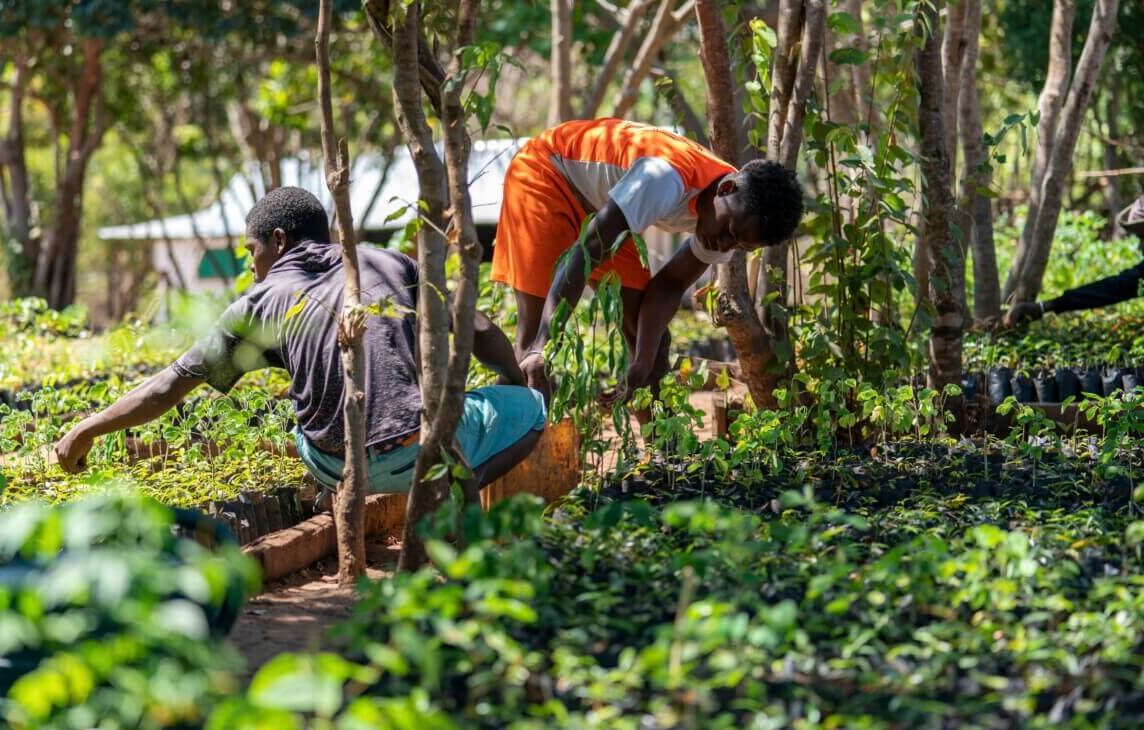


These indicators provide a far more complete picture of long-term project success and help supporters make informed decisions about the level of commitment to the best outcomes. And, measuring restoration success naturally leads to our fifth and final question:
How much atmospheric CO₂ can healthy ecosystems actually remove?
T – Trees & CO₂: How much atmospheric CO₂ can a nature-based carbon removal project remove?
One of the most common questions people ask is:
“How many trees does it take to offset my carbon footprint?”
The honest answer is that there is no universal number. Carbon sequestration depends on many factors, including:
| • Tree species | • Forest management |
| • Local climate | • Tree survival rates |
| • Soil conditions | • Planting density |
| • Rainfall levels | • Time allowed for forest growth |
For this reason, reputable nature-based carbon removal projects avoid simplistic estimates and instead rely on scientific modeling and long-term field measurements.
Measuring Carbon Sequestration
Reliable carbon estimates are typically developed using carefully monitored sample plots and long-term forest data.
Many leading nature restoration sites also undertake Quantified Carbon Modelling (QCM) or similar scientific assessments to estimate how much carbon their restoration projects remove over time.
These calculations consider not only tree growth, but also survival rates, planting density, and environmental conditions, providing a far more accurate picture of long-term carbon removal.
The Importance of Choosing the Right Ecosystem
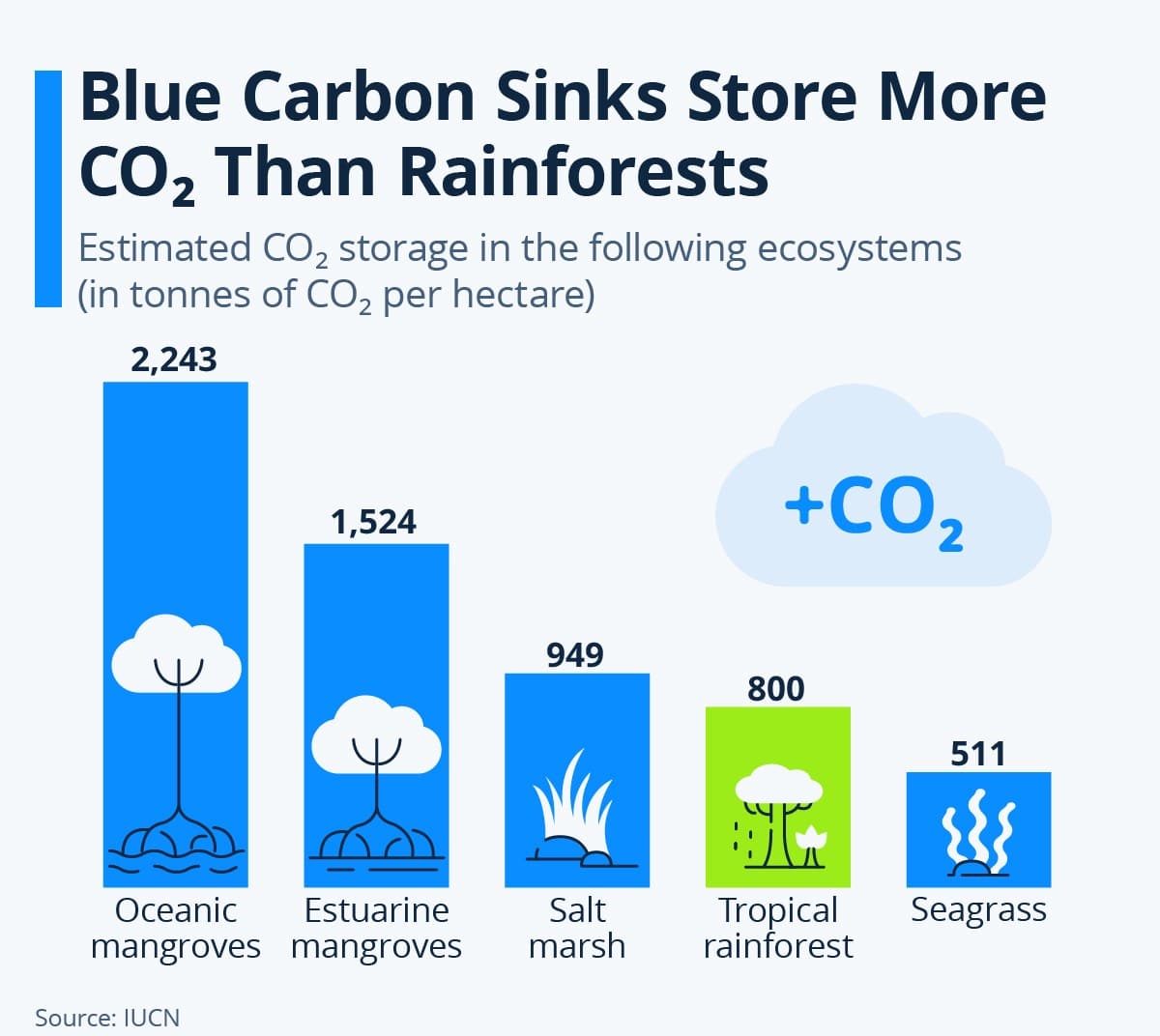
Not all forests capture carbon at the same rate. Research suggests that coastal wetlands and mangrove ecosystems are among the world’s most effective natural carbon sinks, storing substantial amounts of carbon both above and below ground while simultaneously protecting coastlines, improving fisheries, and supporting extraordinary biodiversity. This illustrates an important principle:
The best nature-based carbon removal projects don’t simply focus on maximizing the number of trees planted—they choose to restore the ecosystems capable of delivering the greatest sequestration impact and long-term environmental value.
What Does This Mean for an Individual Carbon Footprint?
Average annual carbon emissions vary considerably between countries and lifestyles. Using Quantified Carbon Modelling undertaken at Purpose on the Planet’s community-based mangrove restoration project in Madagascar, approximately 600 mangrove trees are estimated to remove around 14 metric tons of CO₂ over a typical maturation period—roughly equivalent to the annual per-capita emissions of an average U.S. resident (as projected by Statista).
While individual circumstances differ, this example demonstrates how carefully designed, science-driven nature restoration projects can deliver a wealth of climate benefits while simultaneously creating sustainable livelihoods for local communities to restore ecosystems and offset an average year of CO₂ emissions.
n
Key Takeaways:
What to look for when supporting nature restoration projects for carbon removal?
Nature restoration can be a powerful way to help address your carbon footprint—but the environmental impact depends on what a project actually does, how long it lasts, how its results are measured, and how much carbon it can realistically remove.
Look beyond the label.
Terms such as tree planting, forest restoration, conservation, carbon offset, and nature-based solution can describe very different activities. Before supporting a project, understand whether it is planting new trees, restoring degraded ecosystems, protecting existing forests, avoiding future emissions, removing atmospheric CO₂, or combining several of these approaches.
New forest growth can create additional carbon removal.
When degraded native forests are restored by establishing new trees, those trees can remove additional CO₂ from the atmosphere as they grow and store carbon in biomass and soils. Protecting the existing forest at the same time can prevent the release of carbon that is already stored. A strong restoration project can therefore combine incremental carbon removal with avoided emissions.
Long-term restoration matters more than planting numbers.
A tree only contributes to long-term carbon storage and ecosystem recovery if it survives and continues to grow. Effective restoration therefore depends on appropriate native species, suitable landscapes, ongoing stewardship, protection from future degradation, and community involvement—not simply the number of trees initially planted.
Affordability should be judged by environmental impact, not simply cost per tree.
The cheapest tree is not necessarily the best environmental investment. A meaningful comparison considers what your contribution actually makes possible—including tree establishment and survival, long-term protection, ecosystem restoration, carbon removal, biodiversity benefits, and community livelihoods.
Measurement turns a climate claim into something you can evaluate.
Credible restoration organizations should be able to explain what they are restoring, where the work takes place, how success is measured, how many trees survive, and how carbon sequestration is estimated. Numbers should provide evidence of impact rather than simply serve as marketing claims.
Carbon removal should be considered over decades, not as an instant transaction.
A newly planted tree does not remove a predetermined quantity of CO₂ the day it is planted. Carbon accumulates as the ecosystem grows and matures. For that reason, credible estimates of nature-based carbon removal need to consider growth over time, survival, ecosystem conditions, and long-term stewardship.
The greatest value of nature restoration extends far beyond carbon.
The strongest projects don’t simply sequester CO₂. They restore functioning ecosystems that can protect biodiversity, improve soils and watersheds, increase resilience to drought and extreme weather, and create sustainable livelihoods for the communities responsible for protecting them.
Reducing emissions and removing carbon are complementary strategies.
Reducing your own greenhouse gas emissions remains essential. But for emissions that have already occurred—or that cannot yet be eliminated—supporting high-quality restoration that contributes to additional atmospheric carbon removal can provide another meaningful dimension of climate action.
Frequently Asked Questions:
Nature Restoration and Nature-Based Carbon Removal Projects
What is nature restoration?
Nature restoration is the process of repairing degraded ecosystems such as forests, mangroves, wetlands, grasslands, and coastal habitats so they can once again support biodiversity, improve water systems, store carbon, and strengthen ecological resilience.
What is nature-based carbon removal?
Nature-based carbon removal is the process by which restored ecosystems remove carbon dioxide (CO₂) from the atmosphere through natural biological processes such as photosynthesis and store that carbon in vegetation and soils.
How can nature restoration projects help offset my carbon footprint?
Healthy ecosystems naturally remove atmospheric CO₂ while also restoring biodiversity, improving freshwater systems, and strengthening resilience to climate change. Supporting high-quality restoration projects allows individuals and families to contribute to long-term carbon removal while delivering a wide range of additional environmental benefits.
Do all nature-based carbon offset projects plant trees and protect existing forests
No. Many forestry-based climate projects focus on protecting existing forests or improving forest management rather than planting new trees.
Understanding this distinction is the first step in evaluating projects using the PLANT Framework.
What's the difference between carbon removal and avoided emissions?
Carbon removal actively removes atmospheric CO₂ and stores it in natural ecosystems.
Avoided emissions prevent additional greenhouse gases from being released into the atmosphere by reducing future deforestation and protecting existing carbon stores.
Both contribute to climate action but achieve their environmental benefits in different ways.
Why does local community involvement matter?
Nature restoration succeeds when local communities become long-term stewards of the ecosystems being restored.
Projects that create sustainable livelihoods are often far more likely to protect forests for generations to come.
How can I tell whether a nature restoration project is effective?
Look beyond planting numbers or generic claims about CO2 impact. High-quality organizations explain:
- what they restore,
- how they measure success,
- how local communities are involved,
- how ecosystems are protected over time,
- and how restoration contributes to nature-based carbon removal.
Why did Purpose on the Planet develop the PLANT Framework?
The PLANT Framework was created to help individuals and families compare nature restoration projects using five practical questions focused on long-term environmental impact rather than marketing claims.
Three different ways to support nature restoration and nature-based carbon removal projects
Create Work & Income by Restoring Nature
Give monthly & we’ll plant 60 extra trees
Impacts start at $10
Support 12 of the UN’s 2030 Global Goals
We share monthly insights on your impact
Impacts Start at $20
Be Climate Positive by Removing CO2
Economically offset your CO2 footprint
Only $20/month
DAF Donations: Learn More About Using Donor-Advised Funds to Make a DAF Donation or Nonprofit Grant in Four Simple Clicks
pRIVACY and SECURITY
Top 1% in Transparency
Our founders cover 100% of our general operating expenses with a very specific purpose: This means our donors confidently trust that 100% of every donation they make goes directly toward the environment and the positive humanitarian outcomes that our nonprofit programs have been created to deliver.
The Platinum Seal of Transparency is a rating that puts Purpose on the Planet in the top 1% of charities nationally in terms of transparency. It means that we have shared clear information with the public about our goals, strategies, capabilities, achievements and progress indicators for our nonprofit programs.
Measurable Deliverables
Our program is structured around tangible and measurable result requirements that are rigorously maintained for every donor dollar received. Likewise, all of our donors are updated on the collective, documented progress toward stated program goals via our annual Nonprofit Programs Impact Report.
To better understand the challenges our work addresses, as well as the benefits delivered on the ground by our nonprofit programs, donors can expect to receive continuous insights and tips into the tangible (and “do-able”) ways they can contribute to more effectively ensure a prosperous future.